Field Schools

Staking (or flagging) a claim

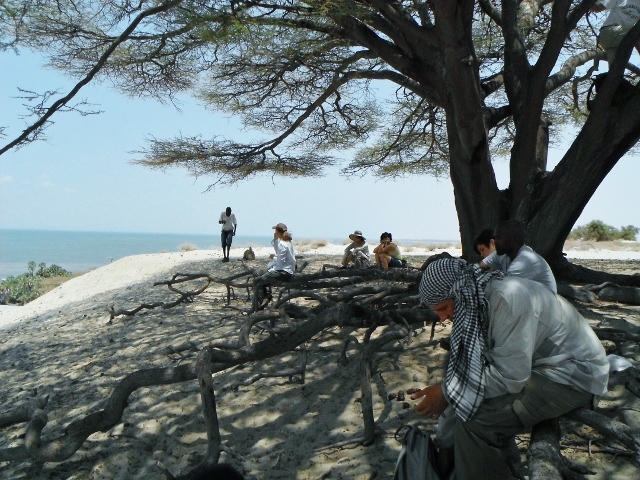
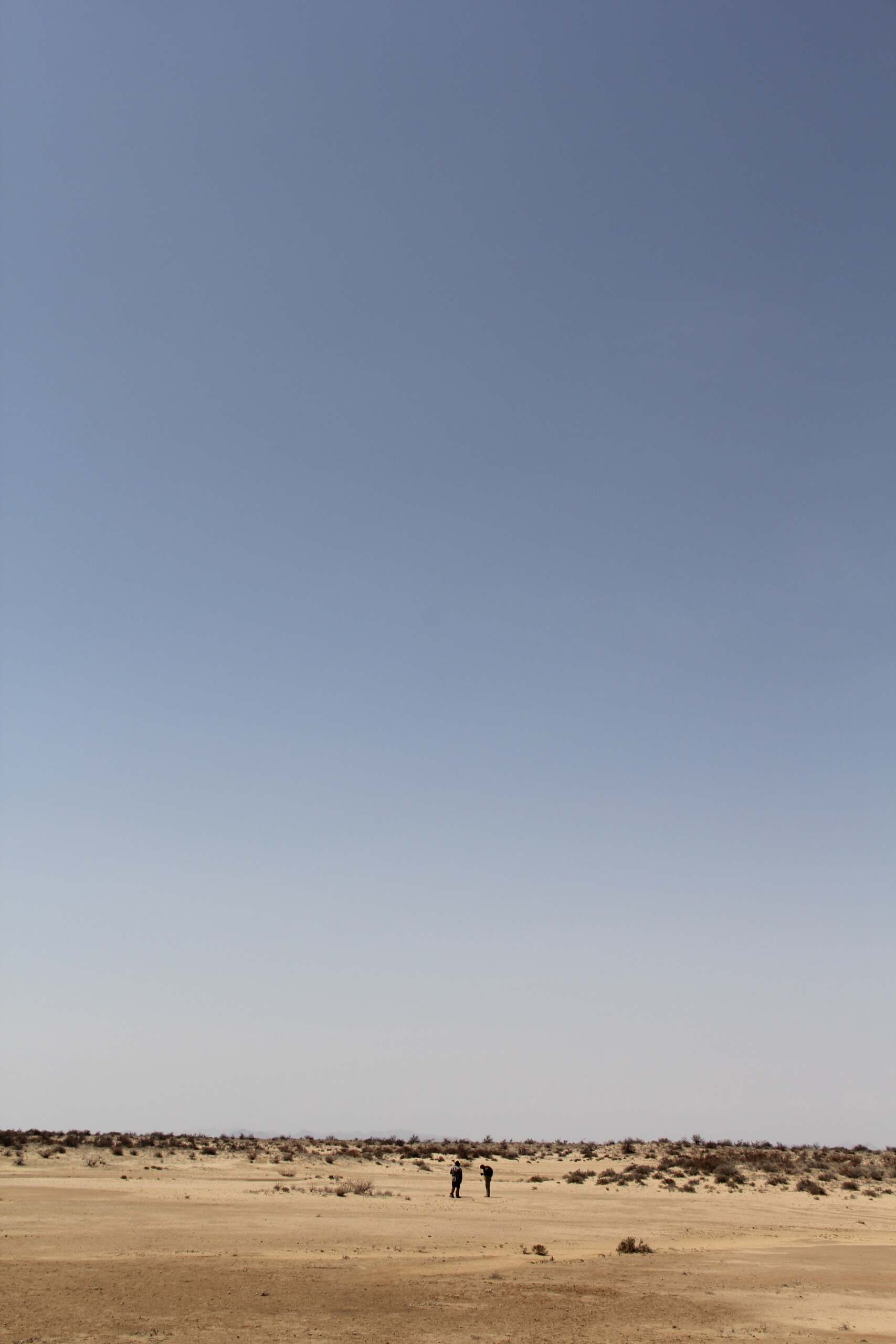
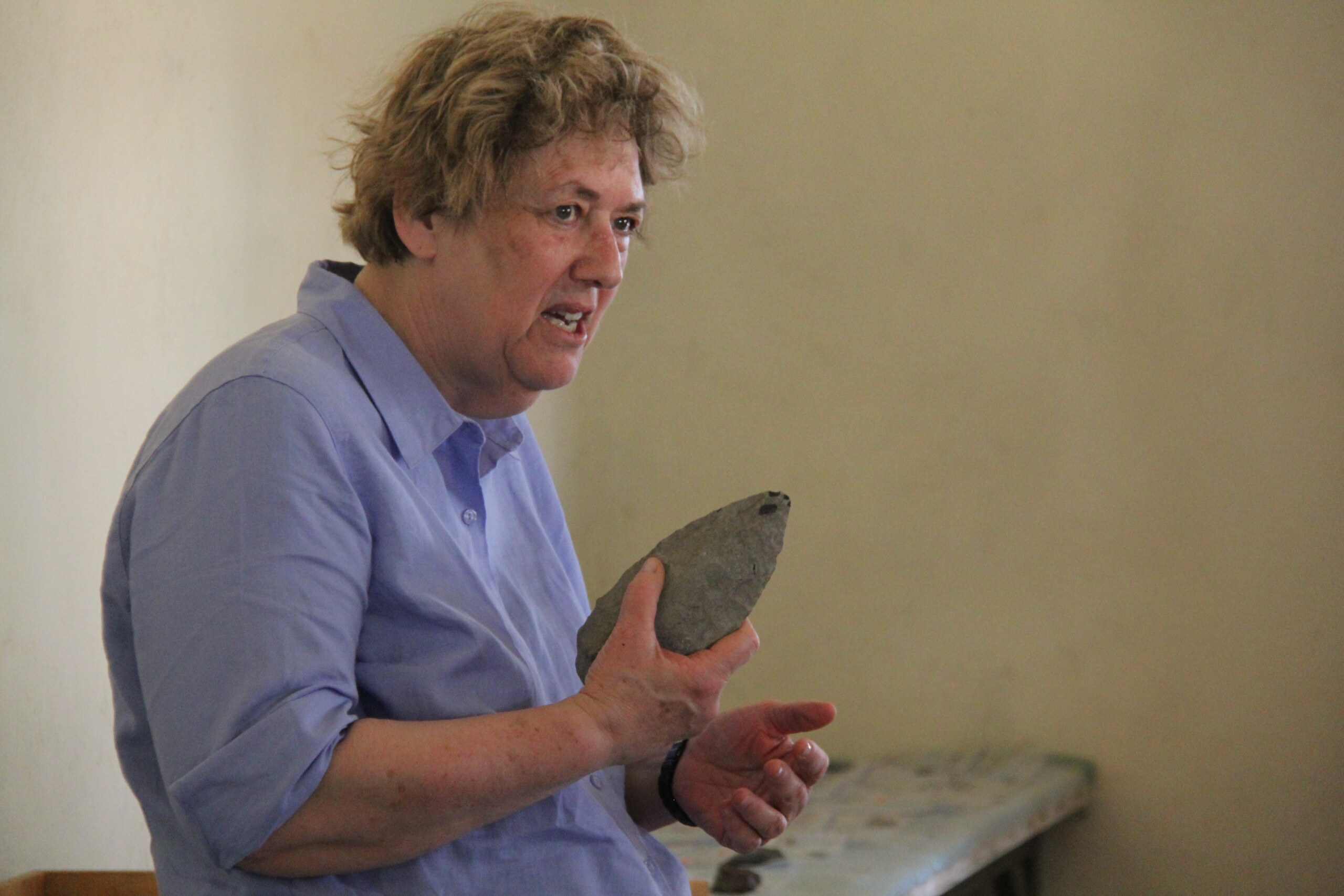
Where people go, they leave their trash. Since the Turkana Basin has been home to people for millions of years, there’s a lot of trash for archaeologists to pick up. The classic image of archaeology is the studious excavator sweating with trowel in hand in a meter-by-meter square trying to figure out how a piece [...]
2017-01-04T18:05:10+03:00March 5th, 2013|Field Schools, General|Comments Off on Staking (or flagging) a claim

Preparing a Paleolithic Barbeque

The Turkana Basin Field school has switched timescales again. In ecology we were learning about the rapid impact modern humans are having on our environment, particularly in the Turkana Basin. In Geology we stepped way back to take a longer view of the basin’s evolution, starting with the Cretaceous rocks of the Basin (about 70 [...]

2017-01-04T18:05:10+03:00February 28th, 2013|Field Schools, General|Comments Off on Preparing a Paleolithic Barbeque

Lothagam: Studying rivers while surviving deserts

Lothagam was too expansive, too important, and just too beautiful to be limited to a one-day visit or one blog post. As usual, the students rose with the dawn, the red rocks of Lothagam radiant with scarlet light. Quickly the nets and bedrolls were packed away, boots were laced, sunscreen applied, and we [...]

2017-01-04T18:05:10+03:00February 24th, 2013|Field Schools, General|Comments Off on Lothagam: Studying rivers while surviving deserts

Lothagam: Red Rocks and Honey Badgers

Lothagam isn’t a name that comes up very often in Physical Anthropology classes. It wasn’t a name a lot of the students on the field school knew before they came out to TBI. But over the last few weeks there was a building drumbeat: Lothagam: the lonely hill on a distant horizon. Lothagam: the oldest [...]

2017-01-04T18:05:10+03:00February 20th, 2013|Field Schools, General|Comments Off on Lothagam: Red Rocks and Honey Badgers

Defining the Holocene-“Anthropocene” boundary

Geology is often viewed as the study of the past, of what happened to get the planet to this point. But many geologists are equally interested in the future, using information collected on climatic, tectonic, and biological change to figure out where the planet is headed. Dr. Bob Raynolds, research associate Denver Museum of Nature [...]

2017-01-04T18:05:10+03:00February 17th, 2013|Field Schools, General|Comments Off on Defining the Holocene-“Anthropocene” boundary

When Lake Turkana busted its banks

The shifting scale of geological inquiry can give you spatial and temporal whiplash. You go from scrutinizing a tiny quartz crystal to trying to sort out the arrival of a massive inland sea or go from contemplating a single layer of ash that took a few minutes to fall to an entire formation that took [...]

2017-01-04T18:05:11+03:00February 13th, 2013|Field Schools, General|Comments Off on When Lake Turkana busted its banks

The Geologist’s Toolkit

Geology is the foundation science. Pun intended. It is the study of how everything we can lay hands on came to be. Geology draws from every investigative discipline – physics, chemistry, biology, anthropology and a lot more ologies – to examine the wheres, whens, and whys of mountains, water, and us. But before a geologist [...]

2017-01-04T18:05:11+03:00February 12th, 2013|Field Schools, General|Comments Off on The Geologist’s Toolkit

Ecological explosions and volcanic diversity

In the middle of Lake Turkana, an experiment is taking place without a single person touching a pipette or checking their controls. The open-air lab is called Central Island, and few people have had the opportunity to watch the experiment in action.

2017-01-04T18:05:11+03:00February 8th, 2013|Field Schools|Comments Off on Ecological explosions and volcanic diversity

Original student research on the Turkana Basin ecosystem

Time flies, especially when you’re learning something new. In the case of the ecology module it was more likely to be mosquitoes or bees than flies, but either way we’re all a little shocked that we’re a fifth of the way through the course. Two weeks in the Turkana Basin gone in a flurry of [...]

2017-01-04T18:05:11+03:00February 6th, 2013|Field Schools|Comments Off on Original student research on the Turkana Basin ecosystem

Home on the Range?

The Turkana people are a traditionally pastoralist tribe, moving their livestock and their homes across the arid range in search of fodder and water for their animals.

2017-01-04T18:05:12+03:00February 2nd, 2013|Field Schools|Comments Off on Home on the Range?

Hike to the Hills

Because we didn’t get enough time in the sun the previous week, a group of students decided to join Dr. Dino Martins on a hike through the Napadet Hills on our Sunday off from coursework.

2017-01-04T18:05:12+03:00February 1st, 2013|Field Schools|Comments Off on Hike to the Hills

Delta Blues, Turkana Style

The road to ecological disaster is paved with good intentions. Years ago, an aid organization introduced Prosopis to Kenya. The relative of the acacia seemed like the perfect plant to rejuvenate the arid regions of Kenya. It grew quickly in intense heat, thrived in arid soil, renewed forage on rangeland and provided wood for charcoal [...]

2017-01-04T18:05:12+03:00January 29th, 2013|Field Schools|Comments Off on Delta Blues, Turkana Style

Kenyan wildlife on a smaller scale

At first glance, the Turkana Basin can seem like a desolate place with a pretty simple food web. Looking out over the landscape, there are widely spaced acacias across the sand flats with scrubby, needle-bearing Indigofera shrubs filling in the gaps for hungry herbivores.

2017-01-04T18:05:12+03:00January 28th, 2013|Field Schools|Comments Off on Kenyan wildlife on a smaller scale

The Present is the Key to the Past

For paleontologists and archaeologists it can take a lot of imagination to conjure up the ancient environments that surrounded the animals and artifacts being excavated. Without a clear idea of the environmental context that surrounded the material exhumed from the ground, it’s tough to examine the clues to paleoecological interactions preserved beneath our [...]

2017-01-04T18:05:12+03:00January 22nd, 2013|Field Schools|Comments Off on The Present is the Key to the Past

Across the Pond!

After months of anticipation, hundreds of questions and a couple bouts of packing, weighing and re-packing, the Spring 2013 Turkana Basin Field School is finally underway and so is the field blog. Over the next few months, check-in here if you want to know what's going on in the Turkana Basin, what we're learning, and [...]

2017-01-04T18:05:13+03:00January 17th, 2013|Field Schools|Comments Off on Across the Pond!

Grand Finale

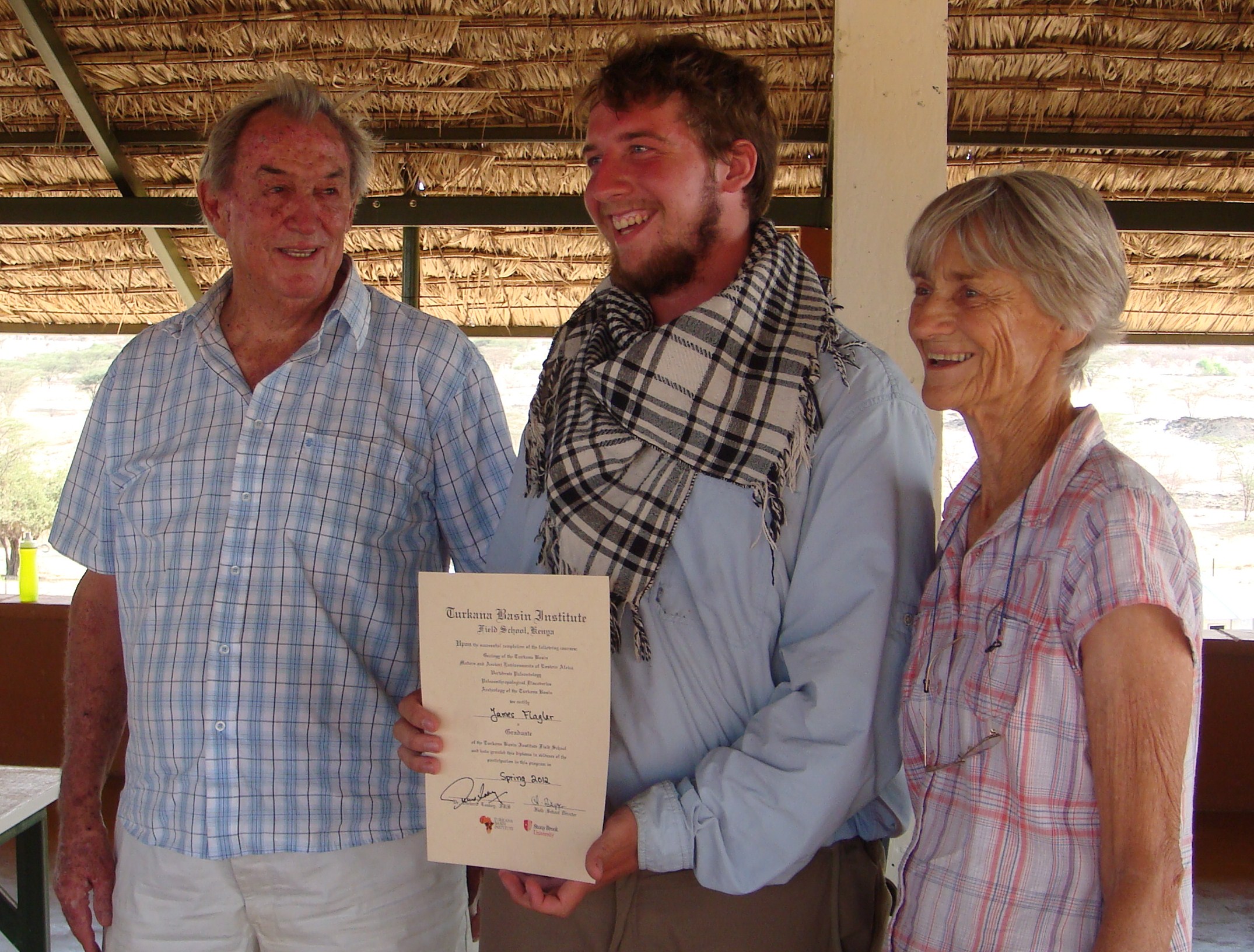
Our amazing Africa experience has come to an end - time rushed by at an astonishing speed! We did have a fantastic last day though: a closing ceremony with Drs Richard and Meave Leakey.  After an inspiring speech by Richard Leakey, students received a beautiful TBI Field School certificate. What a great last day! The [...]

2017-01-04T18:05:14+03:00April 4th, 2012|Field Schools|Comments Off on Grand Finale

Goat Roast

With all their new knowledge about our ancestors and the tools they used, students got to make their own stone tools! Knapping -manipulating stone to create a tool - is not as easy as it sounds. Its a real art because you need the right stones, the right force, and need to know where and [...]

2017-01-04T18:05:19+03:00March 30th, 2012|Field Schools|Comments Off on Goat Roast

Sand Dunes

Yesterday students went to a site rich in pottery shards, ostrich egg shells, stone tools and beads. Even though is was hot, the numerous artifacts that were easily spotted on the sandy surface, made for an exciting afternoon. The site was characterized by large silvery sand dunes and a beautiful vista of Lake Turkana.  The exact age [...]

2017-01-04T18:05:19+03:00March 28th, 2012|Field Schools|Comments Off on Sand Dunes
Go to Top