Admin

About Scott Bjelland

This author has not yet filled in any details.
So far Scott Bjelland has created 27 blog entries.

TBI joins CONFMAP to improve public prehistory education in Kenya

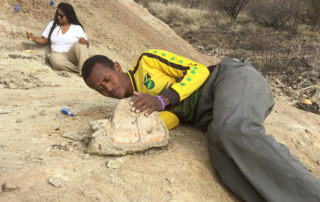
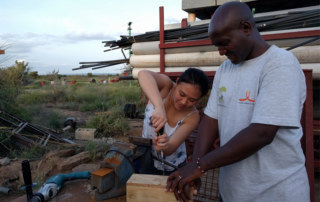
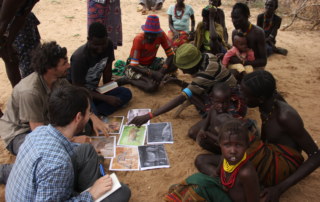
The Turkana Basin Institute has joined the project Consolidating the Future through Mastering the Deep Past (CONFMAP), led by archaeologist Sonia Harmand of Stony Brook University and TBI. The project is funded by the French Ministry of Europe and Foreign Affairs, and aims to improve access to paleosciences for marginalized populations while raising awareness in Kenyan of the value of the prehistoric archaeological heritage of Turkana County in northern Kenya.
2021-12-29T11:19:37+03:00May 14th, 2021|Featured, General|Comments Off on TBI joins CONFMAP to improve public prehistory education in Kenya

Local knowledge informs conservation efforts in Sibiloi National Park

A new study highlights the dramatic biodiversity loss of carnivores in the Turkana Basin's Sibiloi National Park by examining both ecological sampling methods and observations of wildlife by local pastoralists. Sibiloi National Park is located on the north-eastern shore of Lake Turkana and is well known for its paleontological record of human evolution. Historically, Sibiloi [...]

2021-01-15T08:38:23+03:00January 15th, 2021|General|Comments Off on Local knowledge informs conservation efforts in Sibiloi National Park

Local youth outreach through football

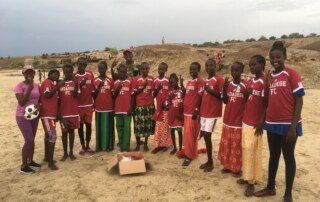
TBI has been organizing a number of football tournaments in Ileret to keep the youth engaged and active during this long school hiatus due to COVID-19. With schools closed indefinitely, students were sent back to their villages with little opportunity for engagement and activity, leaving them vulnerable to early marriages, teenage pregnancies, and drug [...]

2021-12-29T11:21:35+03:00November 23rd, 2020|Featured, General, Local Community Outreach|Comments Off on Local youth outreach through football

Turkana Miocene Project explores climate change impact on evolution

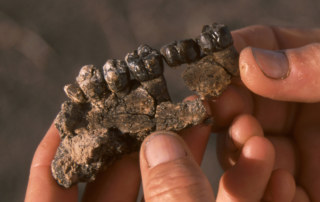
The NSF Frontier Research in Earth Sciences program (FRES) has funded the Turkana Miocene Project proposal to the tune of ~$2.7 million. The grant will fund research over 4 years to better understand how climate change and tectonics interacted to shape the evolution of the environment in which the ancestors of humans and our closest living relatives, the chimpanzees, gorillas, and orangs emerged in Africa.

2021-05-14T10:04:08+03:00October 1st, 2020|Featured|Comments Off on Turkana Miocene Project explores climate change impact on evolution

Smithsonian Magazine names decade’s biggest discoveries in human evolution

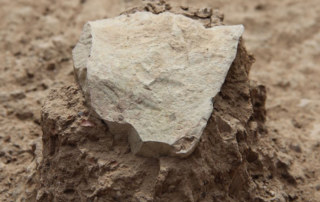
Smithsonian Magazine has named the "Decade’s Biggest Discoveries in Human Evolution." Fourth on the list is the discovery in 2011 of the world's oldest stone tools, made by a team of archeologists led by Sonia Harmand and Jason Lewis of Stony Brook University: "When you think of technology today, you might picture computers, smartphones, and [...]

2020-05-01T10:46:09+03:00May 1st, 2020|Featured|Comments Off on Smithsonian Magazine names decade’s biggest discoveries in human evolution

Did the common ancestor of humans and great apes evolve in Africa or Eurasia?

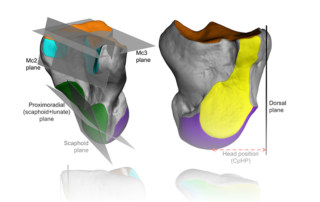
It is known based on DNA analysis that chimpanzees are the closest living relatives to humans, the two together are closest to gorillas, then three together to orangs. Furthermore, humans, the great apes (chimpanzee, gorillas, and orangs) together with the lesser apes (gibbons and siamangs) belong to the superfamily named Hominoidea. The closest living [...]

2019-03-06T05:38:58+03:00March 6th, 2019|Discovery, Featured, Research|Comments Off on Did the common ancestor of humans and great apes evolve in Africa or Eurasia?

Massive Lake Turkana burial site hints at social complexity of earliest herders

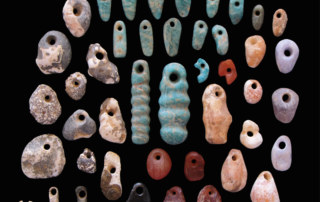
A groundbreaking study has found the earliest and largest monumental cemetery in eastern Africa built 5,000 years ago by early pastoralists living around Lake Turkana, Kenya. This group is believed to have lived without major inequalities and hierarchies, contradicting long-standing narratives about the origins of early civilizations. The study, led by Elisabeth Hildebrand, PhD, Department [...]

2018-08-21T17:59:30+03:00August 20th, 2018|Featured, General|Comments Off on Massive Lake Turkana burial site hints at social complexity of earliest herders

“Alesi”: Discovery & Analysis

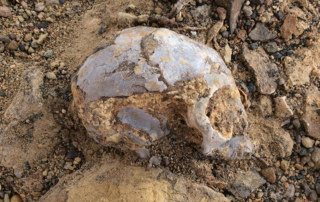
The discovery in Kenya of a remarkably complete fossil ape skull reveals what the common ancestor of all living apes and humans may have looked like. The find, announced in the scientific journal Nature on August 10th, belongs to an infant that lived about 13 million years ago. The research was done by an [...]

2025-08-22T14:51:14+03:00November 14th, 2017|Media, Video|Comments Off on “Alesi”: Discovery & Analysis

Ancient Glycans May Help Trace Human Evolution

Ancient DNA recovered from fossils is a valuable tool to study evolution and anthropology. Yet fossil DNA has not been found yet in any part of Africa, where it’s destroyed by extreme heat and humidity. In a potential first step at overcoming this hurdle, researchers at University of California San Diego School of Medicine and [...]

2017-09-11T12:03:58+03:00September 11th, 2017|Featured, General|Comments Off on Ancient Glycans May Help Trace Human Evolution

13 million-year-old infant ape skull discovered in the Turkana Basin

The discovery in Kenya of a remarkably complete fossil ape skull reveals what the common ancestor of all living apes and humans may have looked like. The find, announced in the scientific journal Nature on August 10th, belongs to an infant that lived about 13 million years ago. The research was done by an international [...]

2017-08-15T15:57:59+03:00August 9th, 2017|Featured, General|Comments Off on 13 million-year-old infant ape skull discovered in the Turkana Basin

World Water Day 2017

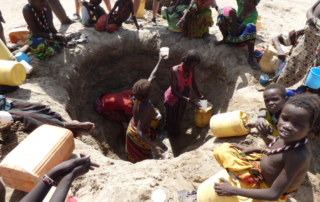
When Richard Leakey invited Sarah, Duchess of York, to visit the Turkana Basin Institute in Kenya their plan was to talk about humankind's place in the world. Sarah did not know that she would be visiting one of the places most affected by the devastating drought in northern Kenya just before World Water Day. [...]

2017-07-14T11:40:37+03:00March 22nd, 2017|Photos|Comments Off on World Water Day 2017

Stony Brook professor publishes stone tool book

Stony Brook University professor John J. Shea recently published a new work through Cambridge University Press entitled Stone Tools in Human Evolution: Behavioral Differences among Technological Primates. From the publisher's description: In Stone Tools in Human Evolution, John J. Shea argues that over the last three million years hominins' technological strategies shifted from occasional tool use, [...]

2017-01-04T18:04:29+03:00November 28th, 2016|General|Comments Off on Stony Brook professor publishes stone tool book

TBI hosts thirteenth HEW: Rethinking Tool-making

The Turkana Basin Institute will host the thirteenth workshop of the Stony Brook/TBI Human Evolution Workshop series at its Turkwel campus from August 2 - 6. Entitled Rethinking Tool-making, the workshop is organized by archaeologists Drs. Sonia Harmand and Hélène Roche. The 2015 discovery of the earliest-known stone tools at Lomekwi 3 in West Turkana [...]

2017-01-04T18:04:34+03:00June 20th, 2016|Events|Comments Off on TBI hosts thirteenth HEW: Rethinking Tool-making

Meave Leakey awarded National Geographic’s Hubbard Medal

Meave Leakey, Director of Field Research at TBI and research professor at Stony Brook University’s Department of Anthropology, received the 2016 Hubbard Medal, named for the first president of the National Geographic Society, Gardiner Greene Hubbard, often called National Geographic’s highest honor. The award is given for lifetime achievement in areas of research, discovery, and exploration. Meave Leakey in [...]

2017-01-04T18:04:34+03:00June 15th, 2016|Featured|Comments Off on Meave Leakey awarded National Geographic’s Hubbard Medal
Go to Top