
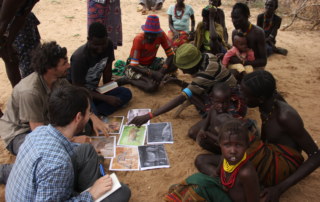
Local knowledge informs conservation efforts in Sibiloi National Park
A new study highlights the dramatic biodiversity loss of carnivores in the Turkana Basin's Sibiloi National Park by examining both ecological sampling methods and [...]
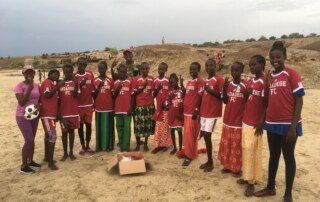
Local youth outreach through football
TBI has been organizing a number of football tournaments in Ileret to keep the youth engaged and active during this long school hiatus [...]
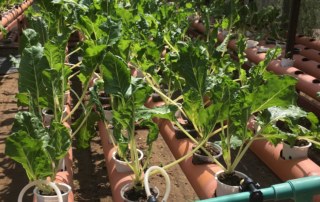
New TBI project aims to bring hydroponic farming to local communities
A new project will expand TBI's hydroponic gardening technology throughout the arid Turkana Basin region, bringing fresh produce to local communities.
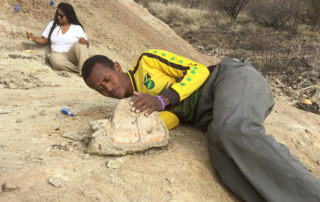
Turkana Miocene Project explores climate change impact on evolution
The NSF Frontier Research in Earth Sciences program (FRES) has funded the Turkana Miocene Project proposal to the tune of ~$2.7 million. The grant will fund research over 4 years to better understand how climate change and tectonics interacted to shape the evolution of the environment in which the ancestors of humans and our closest living relatives, the chimpanzees, gorillas, and orangs emerged in Africa.
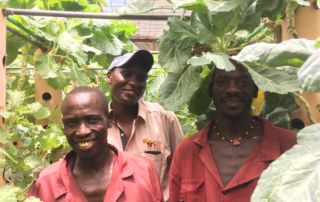
Hydroponic gardening at TBI
Hydroponic farming allows for highly efficient use of space and water, and provides TBI's research stations with plenty of fresh fruits and vegetables in an arid environment.
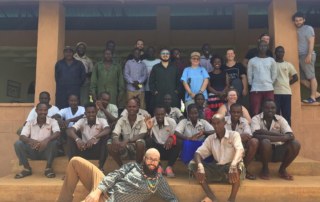
Congratulations to the Spring 2020 TBI Field School Graduates
In the final week of the TBI Spring Field School semester, Dr. Lisa Hildebrand took the students through the cultural developments of early herders [...]

Touring the Lothagam-Lokam Sites
Archaeology often involves extensive surveys before embarking on actual surface collections and/or excavations. Origins Field School students recently took a virtual tour of [...]
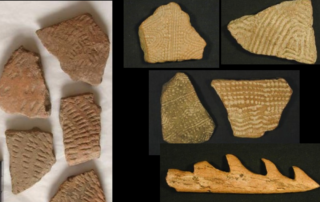
Studying early human culture in Africa
This week, Dr. Lisa Hildebrand introduced students to Holocene cultural practices across Africa and in the Turkana Basin. This is Dr. Hildebrand's primary area [...]
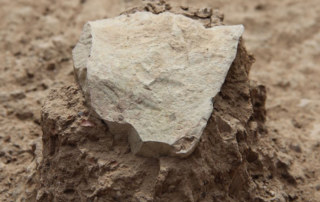
Smithsonian Magazine names decade’s biggest discoveries in human evolution
Smithsonian Magazine has named the "Decade’s Biggest Discoveries in Human Evolution." Fourth on the list is the discovery in 2011 of the world's oldest [...]
Learning the origins of stone tool technology
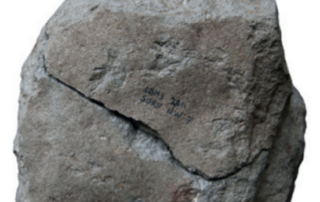
As we delve deeper into major innovations of earliest technologies in the archaeological record, TBI Origin Field School students have learnt to appreciate the [...]

Studying human cultural beginnings
The last course of the field school is underway, Archaeology of the Turkana Basin. Prof. Elisabeth Hildebrand from Stony Brook University joins us as [...]
Understanding the evolution of our genus Homo
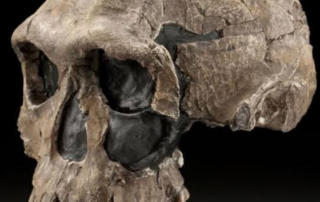
As we approach the end of the Human Evolution course, students have been learning about the evolution of our own genus Homo. They have [...]
Tracing our Evolutionary History
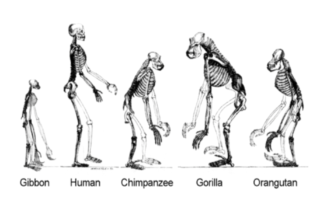
The quest to understand our origins has been a topic that has kept many paleoanthropologists engaged in reconstructing the evolutionary tree in the past [...]
Understanding Anatomy and Osteology in Human Evolution
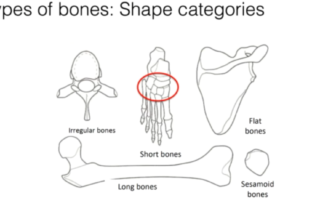
Due to the COVID-19 pandemic, students and instructors returned back to their home countries around mid-March. Since then, the Origins Field School has been [...]
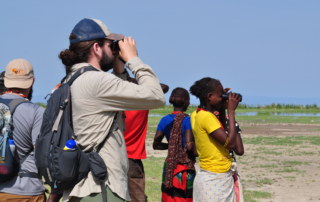
Bird-watching with the locals
On Monday, students were introduced to the basics of anthropometrics, which are fundamental to understanding human physical variations in populations. Students have come to [...]
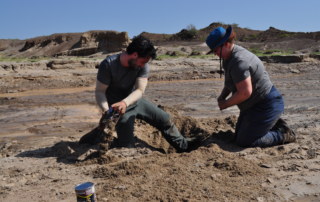
Well-digging exercise
Water is a vital but scarce resource for pastoral communities in the Turkana Basin. The situation has been worsened by climate change, which often [...]
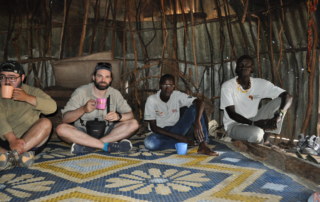
Cultural Immersion among the Dassanach
Over time, anthropologists have been exploring the complexities of different societies through human and cultural interactivity, mainly by living, and practicing the community's way [...]

Excavating Fossils at Buluk
A trip to Buluk on Monday morning marked the start of our last week studying Vertebrate Paleontology. The middle Miocene site of Buluk sits [...]
Collaborating with the local Daasanach community
Photo credit: Miquel Torrents-Ticó. Local ecological knowledge, stemming from generations of human-wildlife interactions, is becoming an increasingly more significant source of important data for [...]

Studying Osteology at the Field School
Our main focus this week has been trying to understand mammalian bone structure and functions. Students learned about mammalian evolution and adaptation to different [...]