Research

A Discovery to Remember

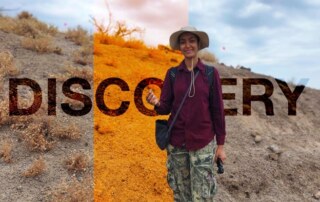
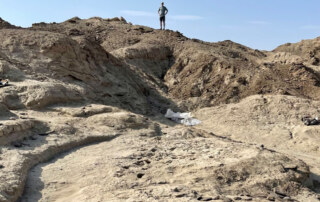
“It was the color, the texture, the shape that stood out in the landscape and when I examined it for a closer look someone in the distance started shouting: Hominid! Hominid!” ~ Anjali Biju, Graphic Design MFA student at Maryland Institute College of Art (MICA) and EcoDepot intern. [...]

2025-08-30T06:32:58+03:00August 29th, 2025|Discovery, Featured, Field Schools, General, Geology Field School, Research, Sticky|Comments Off on A Discovery to Remember

Science and Sustainability: Inside TBI’s Illeret Campus

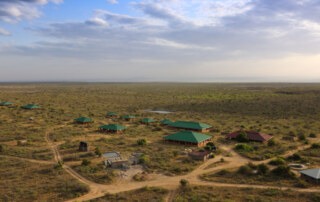
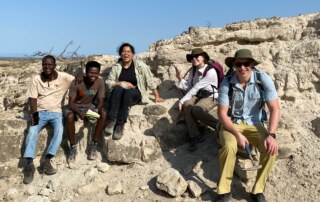
On the remote eastern edge of Lake Turkana, at the corner of Marsabit County and a stone throw from the Ethiopian boarder lies the Turkana Basin Illeret campus. Quiet yet full of discovery, experimentation, and purpose. The land itself is raw and beautiful with plants that have been growing for thousand [...]

2025-08-04T11:40:12+03:00June 19th, 2025|Featured, General, Research, Sticky|Comments Off on Science and Sustainability: Inside TBI’s Illeret Campus

Fossil Footprints Offer Direct Evidence for Two Different Human Species

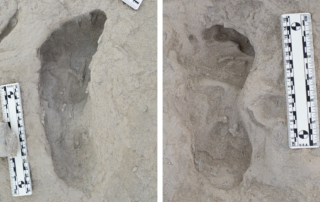
Research Raises Questions About the Role of Competition in Human Evolution  Turkana Basin Institute, Nairobi, Kenya - November 28th Members of the Koobi Fora Research Project in collaboration with National Museums of Kenya and Turkana Basin Institute  are  co-authors of a publication with Kevin Hatala, Ph.D., associate professor of Biology [...]

2024-11-29T06:51:40+03:00November 15th, 2024|Discovery, Featured, General, Research, Sticky|Comments Off on Fossil Footprints Offer Direct Evidence for Two Different Human Species

Dr. Dino J. Martins becomes Director of TBI, beginning September 1st, 2024

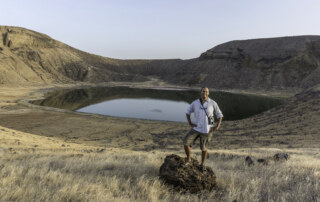
Photo of Dr. Martins on Lake Turkana’s Central Island courtesy of Liam Frederick Stony Brook University announced that noted Kenyan entomologist and evolutionary biologist Dr. Dino J. Martins will begin serving as the director of the world-renowned Turkana Basin Institute. Dr. Martins has served as the CEO of TBI (Kenya) Ltd. since [...]

2024-09-03T16:41:12+03:00September 2nd, 2024|Featured, From the Director, General, Research, Sticky|Comments Off on Dr. Dino J. Martins becomes Director of TBI, beginning September 1st, 2024

Technical University Astronomy Students in Ileret

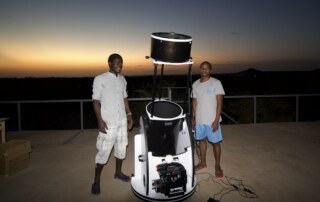
Meet Rashid Nafwa and Vincent Okoth, students from the Technical University of Kenya (TUK) working with the telescope at TBI Ileret. Rashid and Vincent are completing an attachment to meet their final year requirements of gaining practical experience.  Vincent Okoth and Rashid Nafwa preparing for a night of observations Astronomy in general is [...]

2022-11-18T16:01:06+03:00November 9th, 2022|Featured, General, Popular, Research|Comments Off on Technical University Astronomy Students in Ileret

Installing a Telescope in Ileret

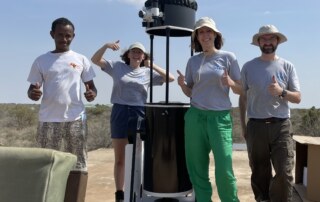
Hello! We are the DART - OPTiK team, a collaboration of researchers from the University of Edinburgh, STFC UKRI, Technical University of Kenya and the Turkana Basin Institute. We will be working at the TBI base in Ileret for the next couple of months to set up a portable telescope which will then take observations [...]

2022-11-18T15:36:29+03:00September 7th, 2022|Development, Discovery, Featured, General, Projects, Research|Comments Off on Installing a Telescope in Ileret

Updates from the field: Discovering new early Pleistocene footprints at Koobi Fora

This July, Kevin Hatala (Chatham University), Neil Roach (Harvard University) and Louise Leakey (Stony Brook University) led a TBI team unearthing a new early Pleistocene footprint site at Koobi Fora. The first tracks were discovered last year by Louise’s team at the bottom of an important skeletal fossil excavation. This year’s excavation uncovered a large [...]

2022-11-18T15:36:08+03:00August 29th, 2022|Discovery, Featured, General, Koobi Fora Research Project, Projects, Research|Comments Off on Updates from the field: Discovering new early Pleistocene footprints at Koobi Fora

A ‘Tuff’ Journey through Time

On the Eastern side of Lake Turkana, the sediments reveal information about the early evolution of humankind. The sedimentary sequences tell us what it would have been like for early humans such as Paranthropus boisei, Homo erectus, and early Homo species millions of years ago. However, in stark contrast to the ecosystem that was home [...]

2022-11-18T15:36:01+03:00August 4th, 2022|Featured, Research|Comments Off on A ‘Tuff’ Journey through Time

MIT Evaporative Cooling goes to Ileret

Hi again! It’s Ava and Christine, Mechnical Engineering Undergraduate students from MIT D-Lab. After a beautiful few days spotting animals in the Masai Mara, we flew up to TBI's facility on the east side of Lake Turkana in Ileret to continue our evaporative cooling research! During our time in Ileret, we focused on understanding the [...]

2022-08-05T08:33:00+03:00July 25th, 2022|Featured, Research|Comments Off on MIT Evaporative Cooling goes to Ileret

Buluk – Geologically Speaking

Pan of the Miocene Dead Elephant Valley in Buluk, Kenya The last stop on the Turkana Miocene Project field tour was Buluk, Kenya, which has for many years been headed by Ellen Miller. Located east of Lake Turkana, Buluk is an early Miocene site that is rife with…. everything! It is a [...]

2022-07-25T09:45:48+03:00July 25th, 2022|African Fossils, Featured, Projects, Research|Comments Off on Buluk – Geologically Speaking

Kamoya Kimeu, legendary Paleontologist, passes away.

We are very sad to share with you the news that Kamoya Kimeu passed away earlier this week after a short spell in hospital with kidney complications. We send our deepest condolences and thoughts to all of his family. Our subsequent appeal to friends and well-wishers to help the family with medical and funeral expenses, [...]

2022-08-05T08:32:39+03:00July 23rd, 2022|Featured, Research|Comments Off on Kamoya Kimeu, legendary Paleontologist, passes away.

Lothagam Revisited: Searching for the Earliest Turkana Basin Hominins

Molecular studies in the late 1960s demonstrated that humans are closely related to chimpanzees and gorillas, and that all three of these great ape lineages shared a relatively recent origin on the African continent. Continued study and methodological advances since this time have revealed that humans and chimpanzees are each other’s closest living relatives and [...]

2022-07-23T18:00:04+03:00July 15th, 2022|Featured, Projects, Research|Comments Off on Lothagam Revisited: Searching for the Earliest Turkana Basin Hominins

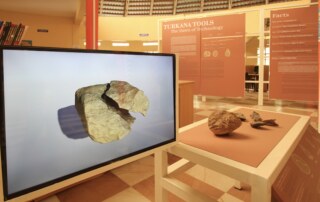
“Turkana Tools: The Dawn of Technology” comes home.

In December 2021, the West Turkana Archaeological Project (WTAP) in partnership with the Turkana Basin Institute, the National Museums of Kenya, and with support from the French government opened an exhibition in Nairobi to showcase the earliest stone tools in the world, found in Lomekwi, Turkana County in 2013.  In June 2022 the exhibition moved [...]

2022-07-15T14:21:43+03:00July 11th, 2022|Featured, Projects, Research|Comments Off on “Turkana Tools: The Dawn of Technology” comes home.

The Rocky Framework to the Rift

Mountains south of Lokichar. These rocks form the core of a Neoproterozoic island arc. Turkana and the East African Rift. The ‘cradle of humanity’. But what is this cradle actually made of? And why is The Rift where it is anyway? The Rift is such an important feature for nurturing primates and hominids [...]

2022-07-15T14:22:03+03:00June 29th, 2022|Featured, General, Research|Comments Off on The Rocky Framework to the Rift

MIT D-Lab Students Start Evaporative Cooling Research at TBI Turkwel

Hello! We are Ava and Christine, from MIT D-Lab, and this summer we are working with the Turkana Basin Institute and our PI, Dr. Eric Verploegen, to research evaporative cooling as a means of post harvest fruit and vegetable storage. In regions of the world where access to food preservation methods is limited, up [...]

2024-04-23T14:36:31+03:00June 28th, 2022|Featured, General, Research|Comments Off on MIT D-Lab Students Start Evaporative Cooling Research at TBI Turkwel

Did the common ancestor of humans and great apes evolve in Africa or Eurasia?

It is known based on DNA analysis that chimpanzees are the closest living relatives to humans, the two together are closest to gorillas, then three together to orangs. Furthermore, humans, the great apes (chimpanzee, gorillas, and orangs) together with the lesser apes (gibbons and siamangs) belong to the superfamily named Hominoidea. The closest living [...]

2019-03-06T05:38:58+03:00March 6th, 2019|Discovery, Featured, Research|Comments Off on Did the common ancestor of humans and great apes evolve in Africa or Eurasia?
Go to Top