Field Schools

Touring the Lothagam-Lokam Sites

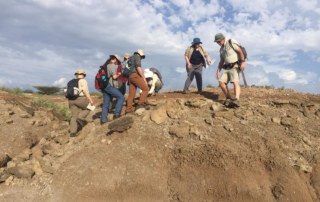
Archaeology often involves extensive surveys before embarking on actual surface collections and/or excavations. Origins Field School students recently took a virtual tour of the Lothagam-Lokam locality on the west side of Lake Turkana, where they explored the research history of the site from 1960s to present. The Lothagam locality is known for its impressive [...]
2025-12-09T16:59:30+03:00May 11th, 2020|Field Schools, Origins Field School, Spring 2020|Comments Off on Touring the Lothagam-Lokam Sites

Studying early human culture in Africa

This week, Dr. Lisa Hildebrand introduced students to Holocene cultural practices across Africa and in the Turkana Basin. This is Dr. Hildebrand's primary area of research, and she shared her perspectives on ancient human activities in the region and the climatic changes that influenced them. The Holocene time period spans from about 11,700 years ago [...]

2020-05-11T04:37:53+03:00May 3rd, 2020|Field Schools, Origins Field School, Spring 2020|Comments Off on Studying early human culture in Africa

Learning the origins of stone tool technology

As we delve deeper into major innovations of earliest technologies in the archaeological record, TBI Origin Field School students have learnt to appreciate the importance of meticulously recording and analyzing data. The archaeological record involving stone tool technology is characterized by changes in production and form of artefacts, and through detailed studies we can understand [...]

2020-04-28T08:22:28+03:00April 28th, 2020|Field Schools, Origins Field School, Spring 2020|Comments Off on Learning the origins of stone tool technology

Studying human cultural beginnings

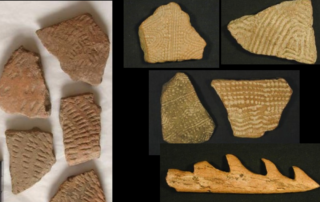
The last course of the field school is underway, Archaeology of the Turkana Basin. Prof. Elisabeth Hildebrand from Stony Brook University joins us as the lead instructor of this course. She has been doing research on the west side of Lake Turkana for years, with a focus on Late Pleistocene and Holocene Archaeology. Prof. [...]

2020-04-21T00:45:25+03:00April 18th, 2020|Field Schools, Origins Field School, Spring 2020|Comments Off on Studying human cultural beginnings

Understanding the evolution of our genus Homo

As we approach the end of the Human Evolution course, students have been learning about the evolution of our own genus Homo. They have come to find out that climatic changes that happened about 3-2.5 mya seem to coincide with the evolutionary changes of our ancestors. We learn that the environmental shift from wooded areas [...]

2020-04-14T08:50:49+03:00April 12th, 2020|Field Schools, Origins Field School, Spring 2020|Comments Off on Understanding the evolution of our genus Homo

Tracing our Evolutionary History

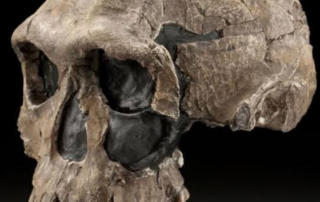
The quest to understand our origins has been a topic that has kept many paleoanthropologists engaged in reconstructing the evolutionary tree in the past few years. Fossil specimens from different sites in the world have been the primary source of data, most of which are from the Late Miocene period (11.6-5.3mya), and the Plio-pleistocene period [...]

2020-04-07T10:26:47+03:00April 5th, 2020|Field Schools, Origins Field School, Spring 2020|Comments Off on Tracing our Evolutionary History

Understanding Anatomy and Osteology in Human Evolution

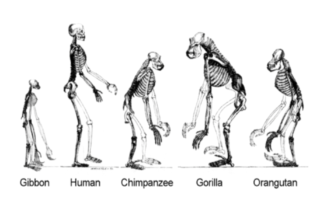
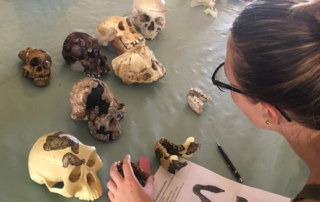
Due to the COVID-19 pandemic, students and instructors returned back to their home countries around mid-March. Since then, the Origins Field School has been utilizing virtual classes for its remaining two courses. Underway is the Human Evolution course, taught by Dr. Carrie Mongle. She is a postdoctoral research fellow at the American Museum of Natural [...]

2020-03-30T12:42:26+03:00March 29th, 2020|Field Schools, Origins Field School, Spring 2020|Comments Off on Understanding Anatomy and Osteology in Human Evolution

Bird-watching with the locals

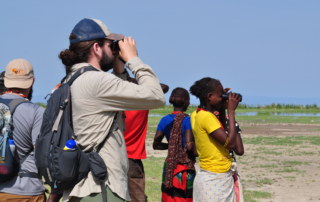
On Monday, students were introduced to the basics of anthropometrics, which are fundamental to understanding human physical variations in populations. Students have come to find out the importance of measuring weight, height, and body fat percentages in assessing diets and life-histories. As emphasized by our instructor, Zane, local adaptations influence much of the body form [...]

2020-03-17T09:28:32+03:00March 15th, 2020|Field Schools, Origins Field School, Spring 2020|Comments Off on Bird-watching with the locals

Well-digging exercise

Water is a vital but scarce resource for pastoral communities in the Turkana Basin. The situation has been worsened by climate change, which often results in prolonged periods of drought or floods. Water sources determine the movement pattern and settling sphere of people and their livestock. During dry seasons, the Daassanach move around in search [...]

2020-03-10T10:08:39+03:00March 10th, 2020|Field Schools, Origins Field School, Spring 2020|Comments Off on Well-digging exercise

Cultural Immersion among the Dassanach

Over time, anthropologists have been exploring the complexities of different societies through human and cultural interactivity, mainly by living, and practicing the community's way of life to acquire first-hand information from an "insiders" perspective. This week, the students have been introduced to the Dassanach culture, where they have been observing, conducting discussions, and interacting with [...]

2020-03-09T10:07:27+03:00March 7th, 2020|Field Schools, Origins Field School, Spring 2020|Comments Off on Cultural Immersion among the Dassanach

Excavating Fossils at Buluk

A trip to Buluk on Monday morning marked the start of our last week studying Vertebrate Paleontology. The middle Miocene site of Buluk sits on basaltic sediments dated to about 16mya. The faunal interchange during the early Miocene, as a result of a terrestrial connection between Eurasia and Africa, was the main factor that brought [...]

2020-03-02T10:05:52+03:00March 1st, 2020|Field Schools, Origins Field School, Spring 2020|Comments Off on Excavating Fossils at Buluk

Studying Osteology at the Field School

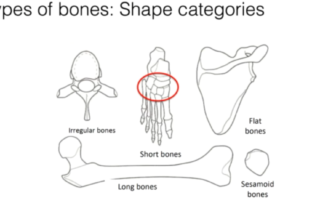
Our main focus this week has been trying to understand mammalian bone structure and functions. Students learned about mammalian evolution and adaptation to different ecological habitats. Bones tell us about the diets, locomotion style, and types of environment animals occupied. For instance, zebras have high crowned teeth (hypsodont), designed to better handle the tough foods [...]

2020-02-24T13:20:32+03:00February 23rd, 2020|Field Schools, Origins Field School, Spring 2020|Comments Off on Studying Osteology at the Field School

The history of the Earth unrolled

  As we start our new course, Vertebrate Paleontology, taught by Prof. Ellen Miller of Wake Forest University, students are ready to put in practice all the amassed knowledge and skills from the last two courses (Ecology and Geology) in reconstructing paleoenvironments, and describing geological contexts in which fossils are found. The week started with [...]

2020-02-20T08:39:40+03:00February 19th, 2020|Field Schools, Origins Field School, Spring 2020|Comments Off on The history of the Earth unrolled

A trip to Koobi Fora

On Wednesday morning, we packed and left for Koobi Fora for an overnight camping trip. Koobi Fora sits on the eastern shores of Lake Turkana, in Sibiloi National Park. The sediments in the region preserve numerous mammalian fossils, making it an important region for paleoanthropological research. Our first stop was at Il Allia river/Laga Bura [...]

2020-02-18T10:11:54+03:00February 16th, 2020|Field Schools, Origins Field School, Spring 2020|Comments Off on A trip to Koobi Fora

Mapping and Stratigraphic sections

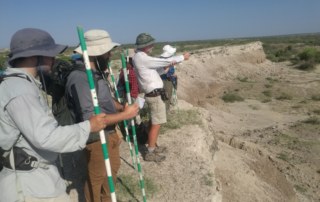
We’re in our last week of the Geology course. Students have been busy sharpening their mapping skills while working on various exercises. On Monday morning, students went out to the exhumed channels in Area 6A, where they examined and mapped sandstones that represent an ancient river channel. According to Dr. Raynolds, organizing geological information is [...]

2020-02-12T10:12:57+03:00February 11th, 2020|Field Schools, Origins Field School, Spring 2020|Comments Off on Mapping and Stratigraphic sections

Understanding the Geology of the Turkana Basin

Turkana Basin geology has been well studied and documented. Understanding the sedimentation processes and geochronology of the region is crucial in reconstructing paleoenvironments and putting data in context. Dr. Craig Feibel and Dr. Bob Raynolds, instructors for the Geology module, introduced students to the stratigraphy of the Ileret region, including the rich Pliocene and Pleistocene [...]

2020-02-10T10:45:13+03:00February 10th, 2020|Field Schools, Origins Field School, Spring 2020|Comments Off on Understanding the Geology of the Turkana Basin

Ecology and climate change

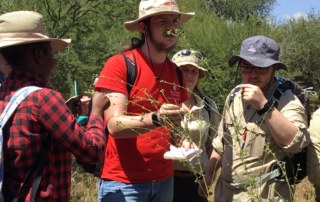
  Our last week at Mpala was an eventful one. Students learned about the various effects of human-wildlife interaction, pastoralism, and the effects of climate change on the ecosystem.  On Monday, Sandy Oduor, a researcher working with Mpala Elephant Project, accompanied students into the field to study the elephants. The immense droughts in recent years, [...]

2020-02-03T11:12:46+03:00February 1st, 2020|Field Schools, Origins Field School, Spring 2020|Comments Off on Ecology and climate change

The Great Grevy’s Rally

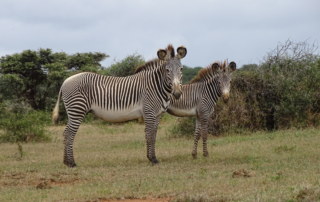
The impact of climate change has been detrimental to the world's biodiversity. Many animals are endangered or facing extinction. In the East Africa Savannah, poaching, drought, and habitat loss are all factors affecting wildlife. Increased human populations have also led to habitat loss, livestock-wildlife competition, and as such, Grevy's zebra are now an endangered species. [...]

2020-02-18T10:01:11+03:00January 29th, 2020|Field Schools, Origins Field School, Spring 2020|Comments Off on The Great Grevy’s Rally

Studying Vegetation ecology at Mpala

  The first week of the semester kicked off with the ecology module at Mpala Research Center (MRC). The biomes at the center are diverse and provide the students with a good “living laboratory” to understand the ecosystem of the region. MRC boasts great wildlife such as elephants and hippos, the endangered Grevy’s zebra, common [...]

2020-01-28T09:35:02+03:00January 26th, 2020|Field Schools, Origins Field School, Spring 2020|Comments Off on Studying Vegetation ecology at Mpala

2020 Origins Field School begins

Happy new year! I hope you all had peaceful holidays. The Spring 2020 field school is off to a great start. The students arrived on the 15th of January and we spent the first three nights at the amazing Wildebeest Eco camp. The ambience is always so peaceful and the best part, a pool to [...]

2020-10-05T19:57:37+03:00January 21st, 2020|Origins Field School, Spring 2020|Comments Off on 2020 Origins Field School begins
Go to Top