dinomartins

About Dr. Dino Martins

Hello! I'm Dino Martins, an entomologist interested in how insects keep the planet running, the biology of vectors and more broadly in the evolution of life and our role in a sustainable world. I teach for the Turkana Basin Field School and serve as the Academic Field Director and am a Research Assistant Professor at Stony Brook University.

Fall 2013 Field School Begins!

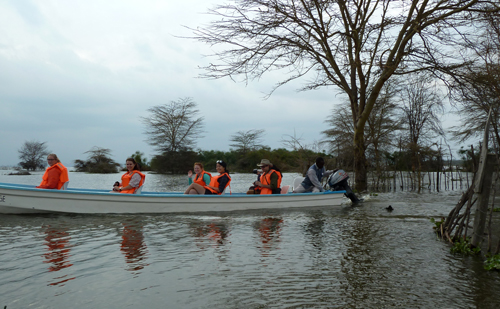
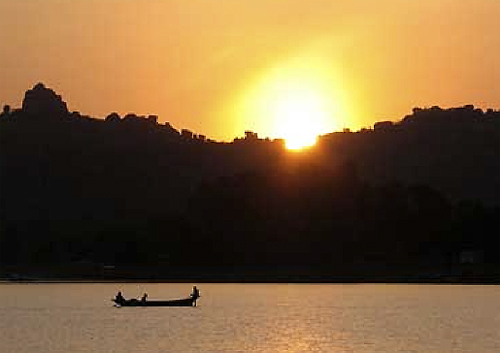
The Turkana Basin Field School for Fall 2013 has begun! The students made their long journey to Kenya from New York and set off on a short safari into the Great Rift Valley to Lake Elementeita, Lake Nakuru and Lake Naivasha. We started at Lake Elementeita in the Rift Valley where we went for a [...]
2017-01-04T18:05:06+03:00September 8th, 2013|Field Schools|Comments Off on Fall 2013 Field School Begins!

What Makes Us Human?

One of the most challenging and interesting questions that has been pondered by scientists through the ages, from Aristotle to Darwin, through to the present day is where, when and how did we, humans, come about? This is a BIG question that perhaps almost everyone has asked at some point in our lives. [...]

2017-01-04T18:05:14+03:00June 1st, 2012|General|Comments Off on What Makes Us Human?

Mud-Flat Life…

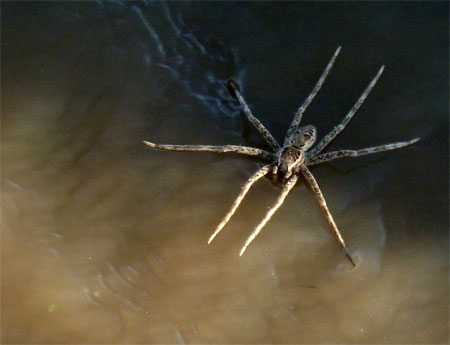
The first module of the Turkana Basin Institute of Ecology is just coming to and end. We spent a couple of days this week learning about and exploring the aquatic habitat of the Turkwel River next to TBI.   One of the amazing things was both how tough life can be in the [...]

2017-01-04T18:05:22+03:00February 4th, 2012|Field Schools|Comments Off on Mud-Flat Life…

Good Bugs and Bad Bugs

Good Bugs and Bad Bugs One of the important topics that we have been exploring as part of the Ecology Module is the question of ‘ecosystem services’ and how biodiversity, basically wild species, contribute to human livelihoods.   TBI is working with the community to address various issues, and one of these is [...]

2017-01-04T18:05:22+03:00February 1st, 2012|Field Schools|Comments Off on Good Bugs and Bad Bugs

Of Goats and Grasshoppers…

Goats vs. Grasshoppers The two main herbivores present around the Turkana Basin Institute are goats and grasshoppers. The goats are obvious as you travel around – there are small groups of them moving about or resting in the shade of trees during the day.     Grasshoppers are also common out here, though [...]

2017-01-04T18:05:22+03:00January 31st, 2012|Field Schools|Comments Off on Of Goats and Grasshoppers…

Field School visits the Kerio Delta

The TBI Field School Students visited the Kerio Delta this weekend. We visited the Kerio Delta as part of the Ecology module, looking at some of the different vegetation types and learning about some of the species that live in the deltas of Lake Turkana. One of the most important and beautiful groups of insects [...]

2017-01-04T18:05:22+03:00January 30th, 2012|Field Schools|Comments Off on Field School visits the Kerio Delta

Spring Field School Begins

The Spring Field School has taken off at the Turkana Basin Institute at South Turkwel. Students have started exploring the ecology of the area. Understanding ecology involves an appreciation of the vegetation. Students have been conducting vegetation surveys to learn about the density, patterns and relationships between plants at TBI. We have been spending time [...]

2017-01-04T18:05:22+03:00January 27th, 2012|Field Schools|Comments Off on Spring Field School Begins

T-paper timeline of Earth History!

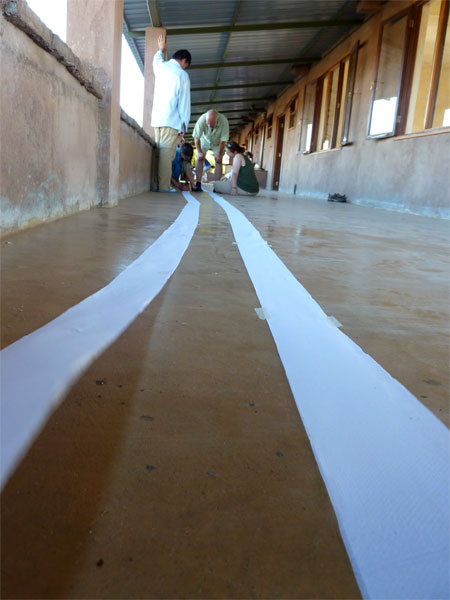
The students have been studying Vertebrate Paleontology with Profs Rene Bobbe and Kyalo Manthi for the current module As part of this they recently made a timeline of the Earth's History using toilet paper. Here are some of the highlights from this fun exercise...   [...]

2017-01-04T18:05:23+03:00October 18th, 2011|Field Schools|Comments Off on T-paper timeline of Earth History!

Three sisters of dinosaurs

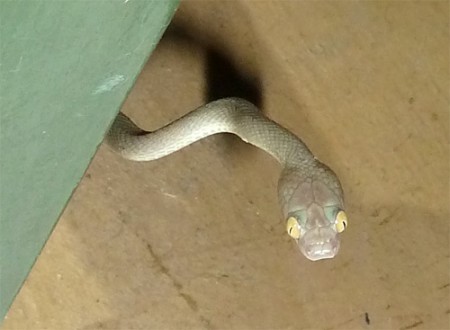
Hello - we have had a couple of interesting visitors at TBI last night and this morning. Just as I was heading to bed, the students came to get me saying there was a snake in the mess hall. I went over and found this beautiful snake clinging to one of the table legs. This [...]

2017-01-04T18:05:23+03:00October 16th, 2011|Field Schools|Comments Off on Three sisters of dinosaurs

River Wildlife!

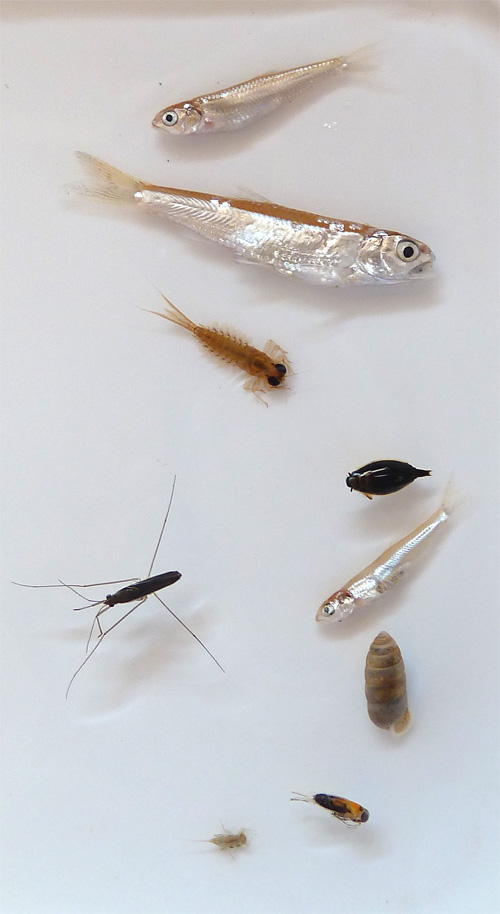
After the visit to the Kerio Delta, closer to ‘home’ at TBI, we investigated the riverine ecology. This involved jumping into the river and getting wet. It wasn’t hard to convince everyone to do so in the middle of a hot sunny morning!

2017-01-04T18:05:23+03:00October 8th, 2011|Field Schools|Comments Off on River Wildlife!

Birds and bees in the Kerio Delta

The Lake Turkana Basin, while being a hot and dry area, includes several river systems and the 6,000 km2 + lake Turkana. Three rivers feed into the lake: The Turwel, Kerio and Omo. The Omo, from the highlands of Ethiopia contributes about 90 % of the lakes’ waters. The Kerio River comes from the south, [...]

2017-01-04T18:05:23+03:00October 7th, 2011|Field Schools|Comments Off on Birds and bees in the Kerio Delta

Field trip to the Napedet Hills

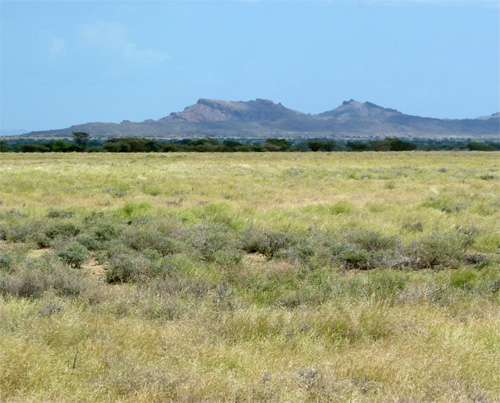
A few days ago we all took a trip to the Napedet Hills that lie southwest of TBI. The drive to the hills was partly across grass-covered plains. A rare and beautiful sight in the desert. The last time we climbed the hills in February earlier this year there wasn't a blade of grass to [...]

2017-01-04T18:05:23+03:00October 7th, 2011|Field Schools|Comments Off on Field trip to the Napedet Hills

Desert filled with bees…

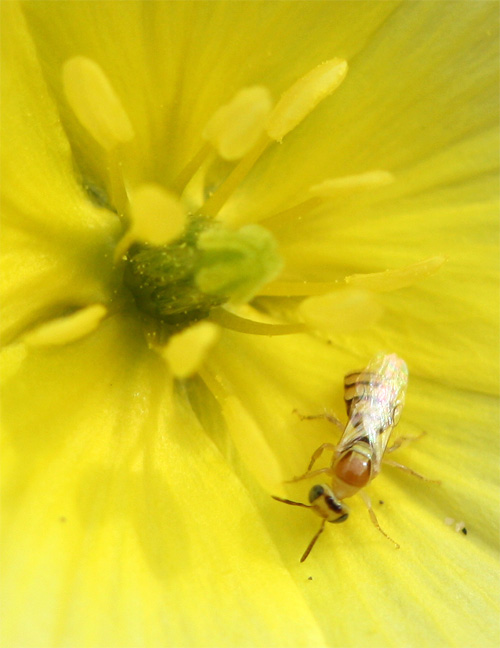
The rains that have brought out the flowers around TBI have also brought out a large number of insects. Like many of the plants, the insects are active and taking opportunity of the greenery to forage and breed. And like the plants they are all under intense pressure to complete their life-cycles. For insects this [...]

2017-01-04T18:05:24+03:00October 3rd, 2011|Field Schools|Comments Off on Desert filled with bees…
Go to Top