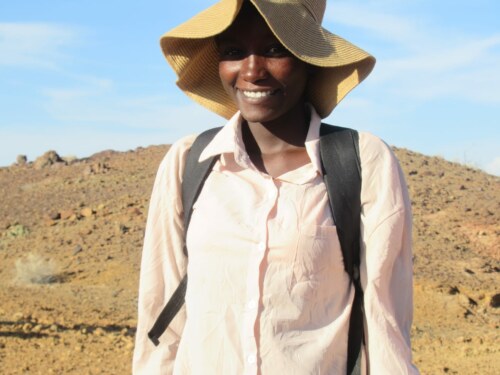
Hello! My name is Patricia Nyaga, I just completed my undergraduate degree, Bachelor of Arts in History and Archaeology from Maseno University, expecting to graduate in December 2022.
This being our second week studying Paleontology, our main focus was on the paleontological field methods. We headed to the Napudet hills for a two-day camping trip to explore the rich Miocene deposits. This is where the skull of Nyanzapithecus alesi and “Popeye” fossils have been found. We pitched our tents on arrival, and got to work in the field in the afternoon. We visited the Buffalo hill site where we prospected for fossils, and we were lucky to find some fossilized bone fragments including a fish tooth and a high-crowned bovid tooth.
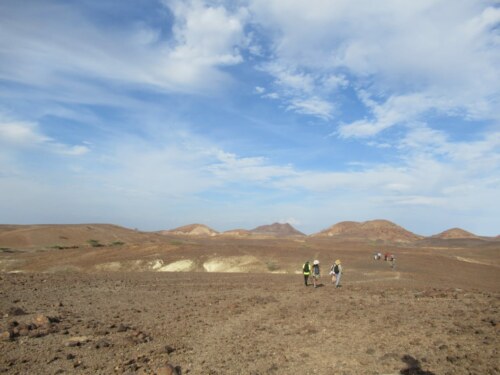
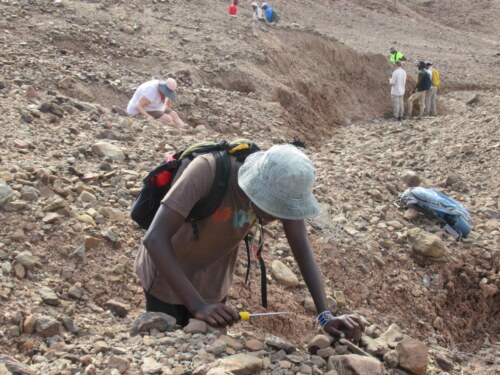
Prospecting for fossils at Buffalo Hill, a site within Napudet.
On the second day, we headed to the site where Nyanzapithecus alesi was found, this is an almost complete cranium of an infant ape dated to 13 million years. The find is one of a kind, and it has proved its significance in understanding apes and human evolution. John Ekusi, the TBI field assistant who discovered the skull as part of the team led by the late Professor Isaiah Nengo, gave us a brief account of the day when it was found.
Our next stop was the Red hills, a site where many of the mid-Miocene micro-mammals including rodent teeth and galago fragments have been found. We conducted a “hill crawl” to have a thorough look at the ground, and we were delighted to find the distal end of a humerus bone, and a tragulid tooth from the near-by Carnivore hill. All the students participated in collecting and cataloging the specimens following the TBI collection protocols and under the guidance of Martin Kirinya who is the collections manager.
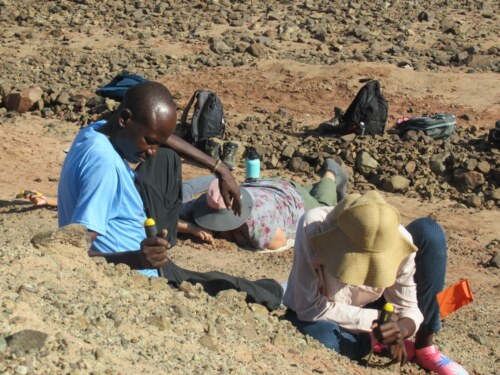
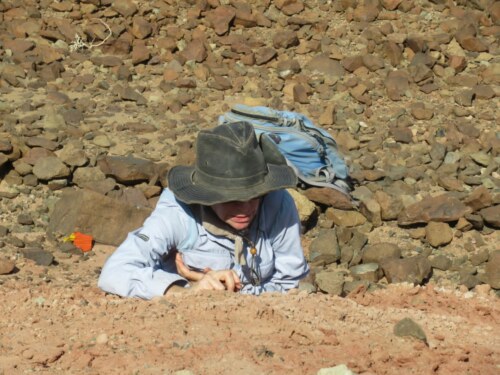
Doing a hill crawl to have a thorough looks for specimens in the “Red hill” part of Napudet.
Prof. Miller lead us to the columnar basalts which has been crucial in correlating depositional events in this region. In the afternoon we visited the mid-Miocene Fossil-forest site represented by calcified tree-trunks. We prospected and crawled around and we were able to find some distal and proximal phalanges of mammals.
We travelled back to TBI on Wednesday morning. The day was spent wet sieving sediments from the early Miocene site of Nakwai. We screened through the materials, and all of us managed to find bone fragments, shells and the most impressive one was a half of an incisor tooth of a pig.
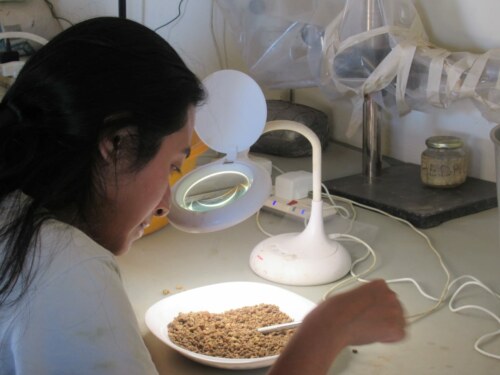
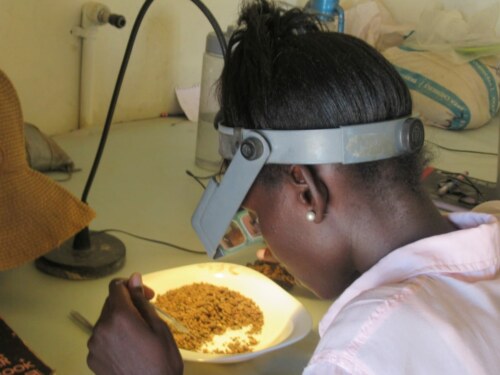
Going through fragments after wet sieving – this is a process that ‘rinses’ fossils of dust and makes small pieces easier to find.
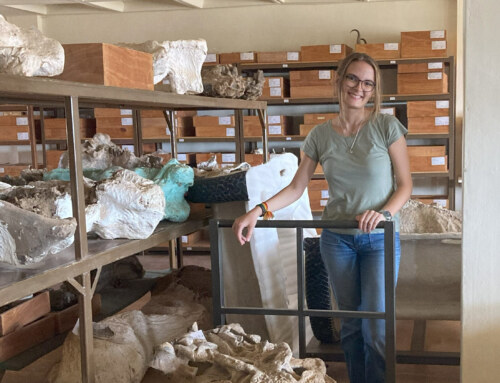
Thursday was an excavation day at the South Turkwel site near our camp. We followed the TBI excavation protocols which involved, hardening the visible part of the elephant tooth, cleaning the area around it by brushing to remove sediments, and collecting bone fragments. The next step was digging around the fossil with our picks, we then plastered the fossils and left it to dry for 2 hours. The fossil was cataloged and field photographs taken before and after plastering. The fossil was carried back to TBI where the plaster was removed, and the fossil reconstructed and stored in the collection. Back at TBI, we cleaned some of the fossils in the preparation lab using air-scribes.
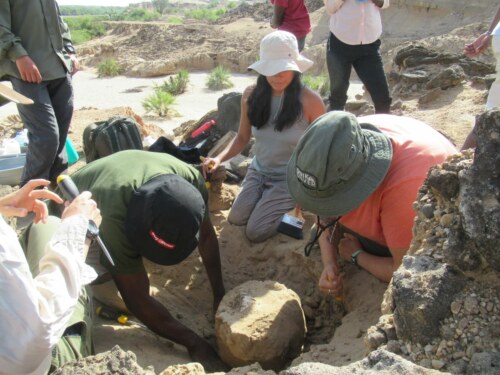
Excavating an elephant tooth, first the sediment around the fossil is carefully exposed…
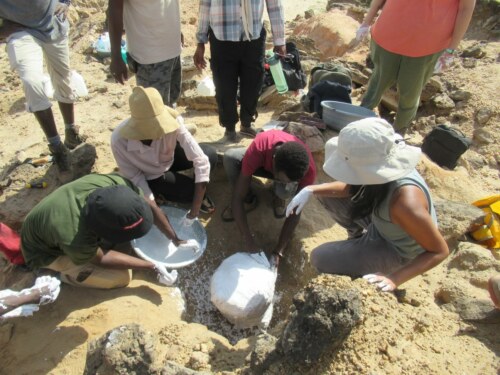
..then the whole section is covered in plaster for safer transport to the lab, where the fossil can be extracted with greater care.
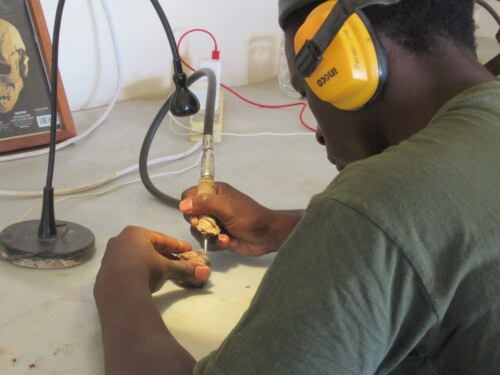
Using air scribes in the TBI preparatory labs.
The final day of our Paleontology module was spent in class with Dr. Miller leading the discussion, revising all the topics we had covered. We also had a guest lecture from a Turkana University College masters student, Linet Sankau, who presented her dissertation topic focusing on stable isotope analysis of bovids diets and niche partitioning in the Late Miocene of Lothagam. The final examination on Saturday afternoon marked the end of the Paleontology module.
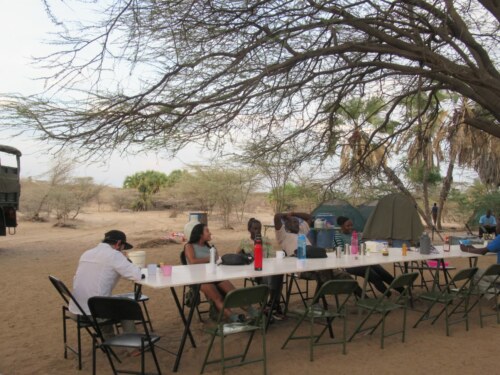
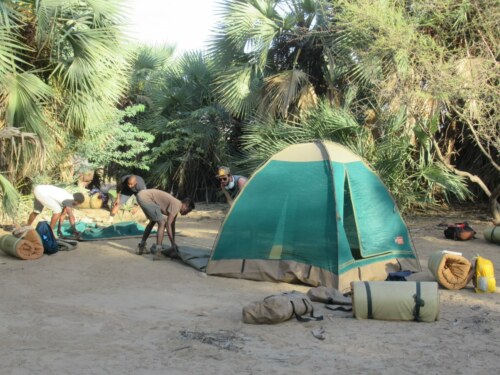
Camp life in Napudet.