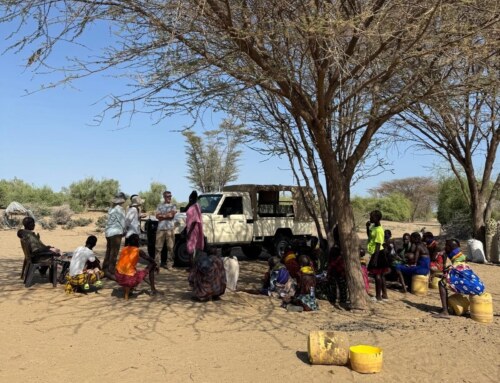
Doctor Tabitha (second from right) with students in Turkana after a talk on menstrual hygiene.
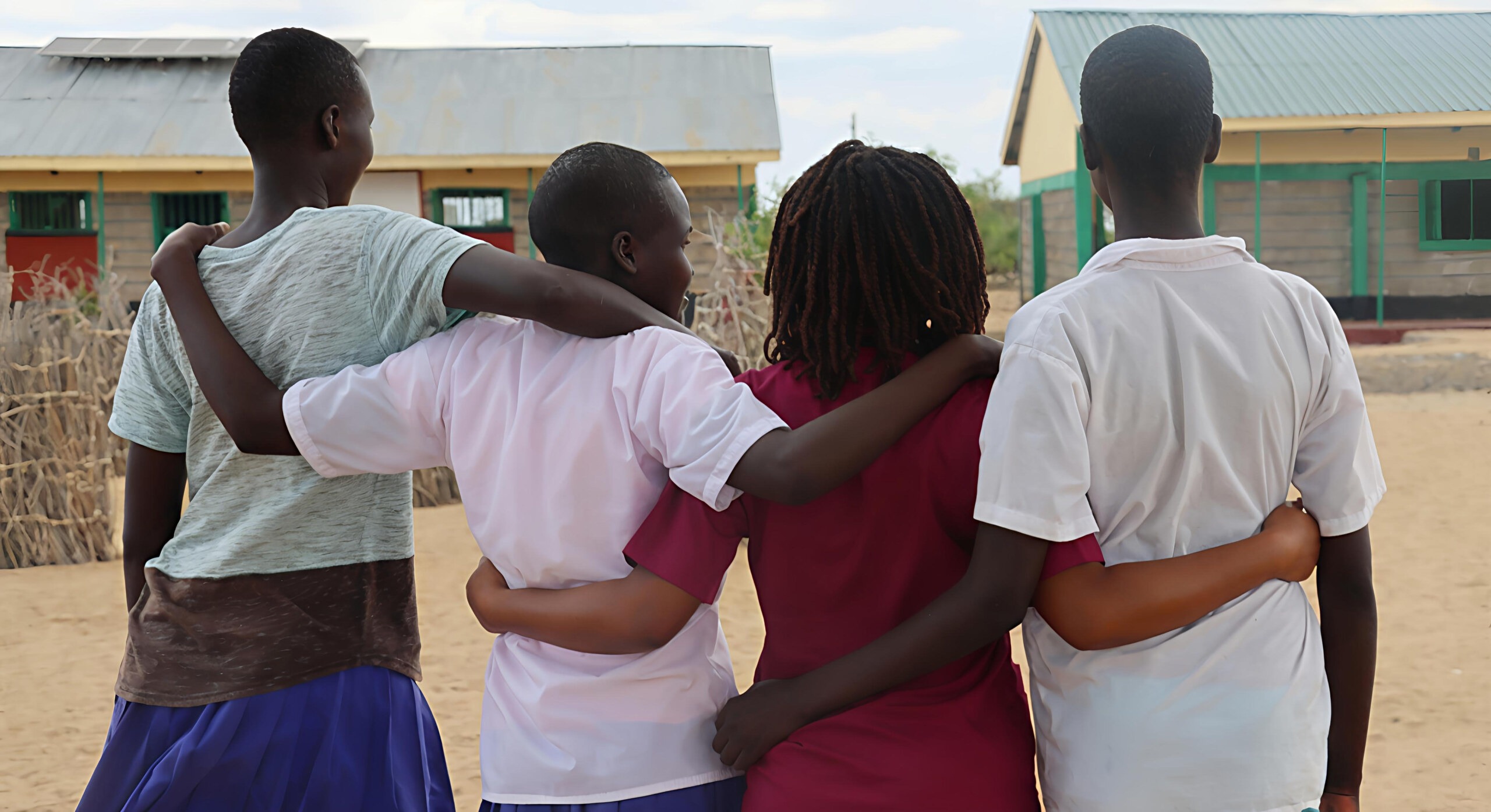
In a classroom at Kerio primary school, Sharon Odero a school teacher marks attendance. Again, some names are missing. Those of girls. “Most of them stay home for a week every month,” she says. “The syllabus goes on, and they’re left behind.” The reason is simple. No access to menstrual products. The same narrative is shared by different teachers in the Turkana Central region.
In parts of Turkana, menstruation means pause. Without sanitary pads, girls use what they can acquire. From pieces of mattresses to an old cloth. Chief Sarah who has been a voice of authority over the years and a supporter of women empowerment shares that this trend has existed for ages for the Turkana women. Older women would sit over a hole in the ground, waiting for menstrual blood to flow. It’s a reality shaped by stigma, poverty, and lack of accessibility. “Some women wear animal skin and let it stain. Once dry, it is easily scrapped out”, she says.
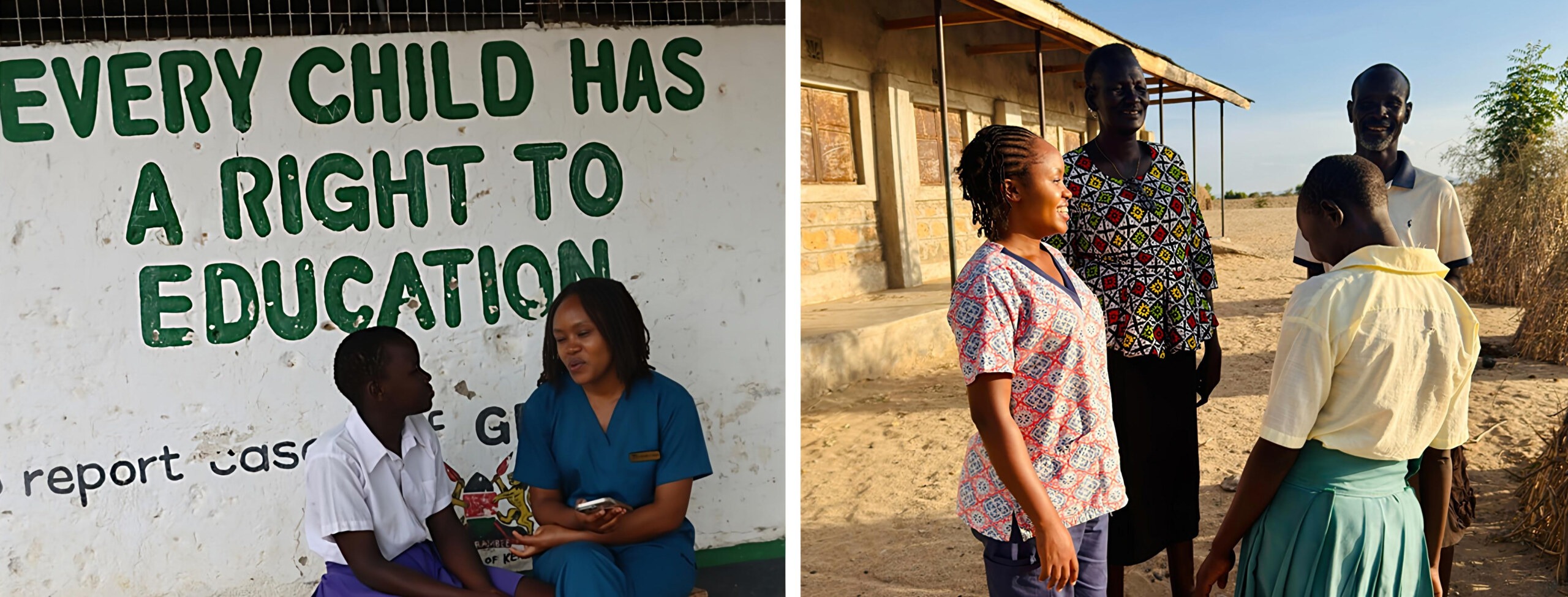
Dr. Tabitha (left) with Chief Sarah talking to a student on menstrual health with support from the student’s father
A Sustainable Solution: Period Panties
In five schools across Turkana Central Ward, something small but powerful is happening. A pilot program by Turkana Basin Institute is handing out reusable period panties to girls who’ve never had consistent access to menstrual products. And for the first time, the girls are showing up to school even on their period. One student narrated the challenge she has faced in lacking menstrual products. “I have gone through many challenges when it comes to accessing sanitary pads. Many times, I couldn’t come to school because I would stain my uniform and boys would sometimes laugh at me. Sometimes the school gives us some pads every beginning of a school term but they are barely enough even if you’re lucky to get them. Some of my friends would help me. Now with these panties, I come to school comfortably.” The period panty is proving to be more than just a hygiene product, it is a tool of empowerment.
The pilot program has so far revealed several encouraging outcomes. Most students expressed high satisfaction with the product, with nearly half rating them as perfectly comfortable and effective and preferring them over the traditional sanitary pads. Despite facing challenges such as limited access to soap, the girls are showing impressive adaptability by washing their panties during school breaks, maintaining hygiene through resourcefulness. Some did mention opportunities for improvement, particularly in enhancing absorbency for those with heavier flows. These findings demonstrate both the immediate benefits and potential for refinement in future alterations of the program.
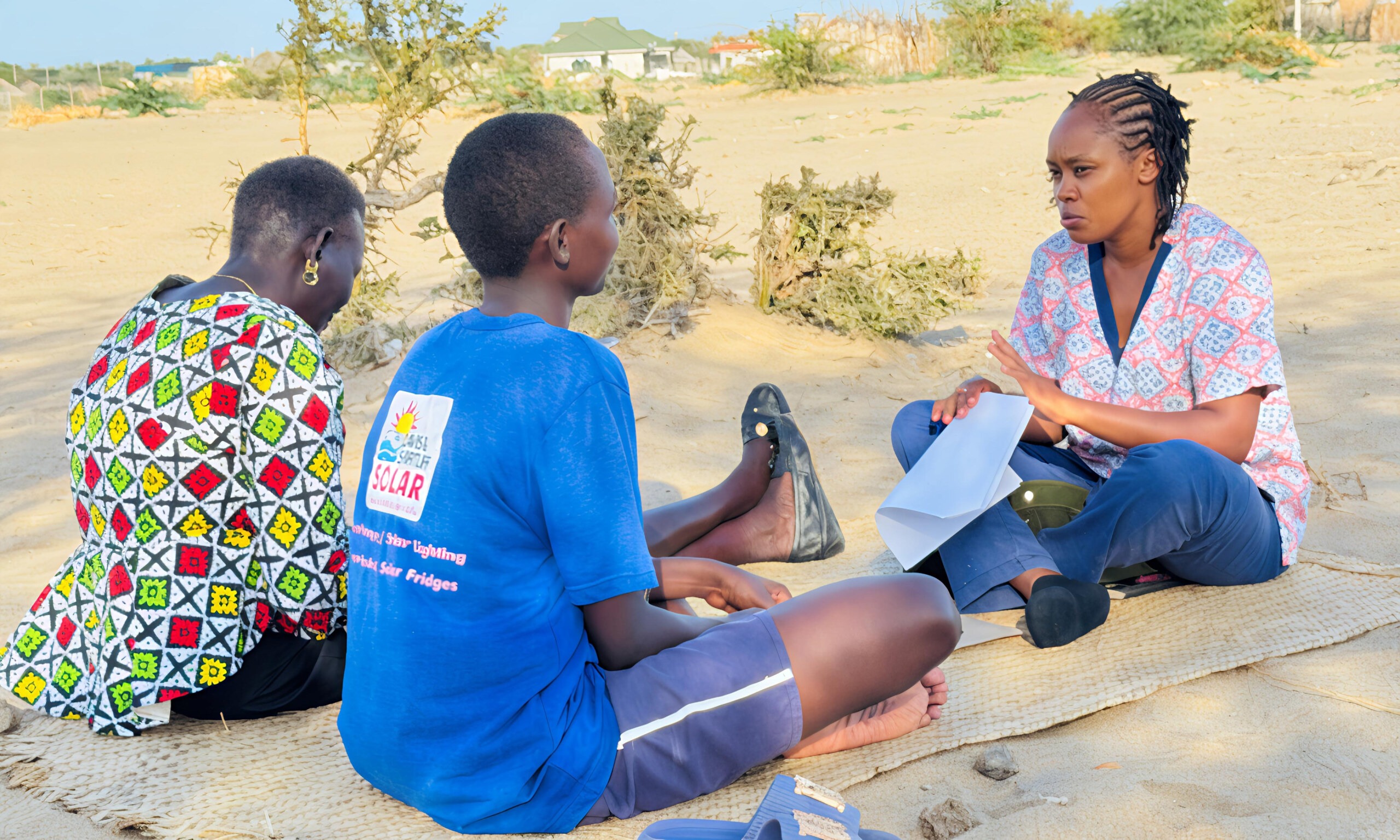
Chief Sarah and Dr. Tabitha getting feedback on the period panty as a menstrual product
What happens now? The success of this small but effective pilot has planted the seeds for something greater. A possible future where no girl in Turkana misses school because of her period. The solution is available and the work is just beginning. The first batch of the period panties for the pilot study was supported by The Reddy Organization in Vietnam.
Starting out with 10 students, the program aims to reach over 1,000 girls. Not just to distribute more panties, but to pair them with menstrual health education that stops stigma and empowers young women with knowledge. For TBI, partners and the community, this is more than a hygiene campaign. It’s a movement and a blueprint for dignity. Chief Sarah says, “We’re giving our girls the freedom to learn without fear or shame.” And when fear and shame fade, what remains is potential unlocked, unapologetic, and unstoppable. The goal is to make sure the Turkana girl stays in school not just three weeks a month, but every day she chooses to learn.
Authors: Laura Katana, Dr. Tabitha Maisiba.