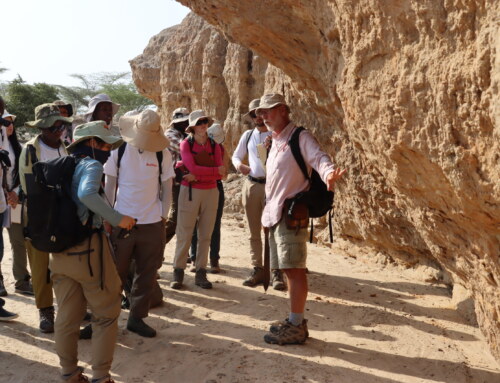
The Harvard Summer Program of 2025 was in full swing as students were learning about the different components of the East African Rift System. A very important part of this system is Lake Turkana itself. A day was spent next to the lake and even in the river, amongst Doum Palm trees that decorate the landscape. The water lapped at the shore and sparkled in the hot sun and the expedition to cross the river made this an eventful day. The students had brave faces as they waded through the deep river and walked through the soft sand of the riverbed to get to Lake Turkana. With TBI’s Harvard Summer Program’s camp located on Lake Turkana’s shores, approximately 10 kilometers in distance, it helped students connect and interact on a deeper level with the immediate environment around them and learn about the present interconnections.
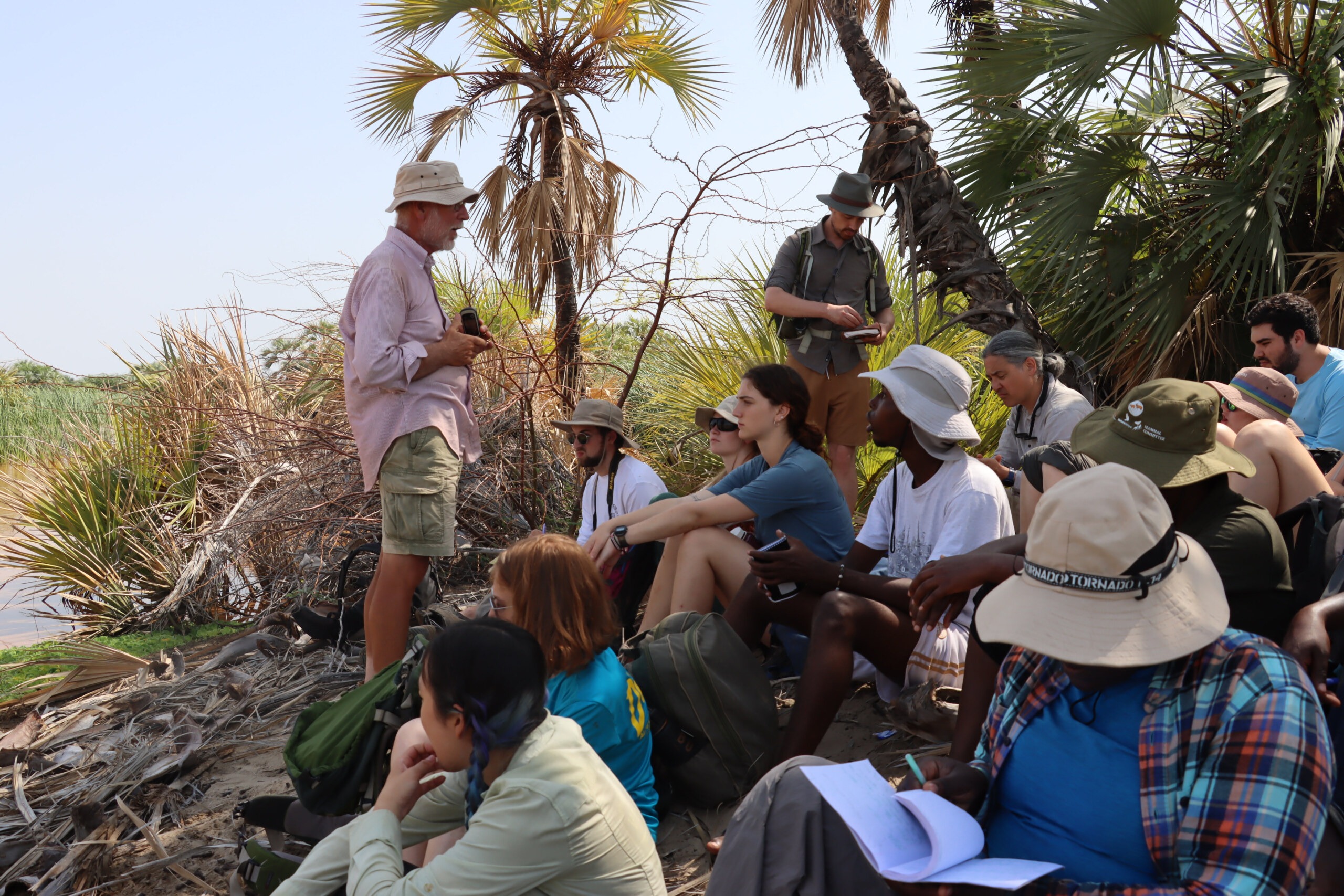
Dr. Craig Feibel teaching students about lake systems with Professor Kevin Uno
What happens at Kerio Delta?
The students visited Kerio Delta, seeing how this relationship between the Turkwel river meeting Lake Turkana impacts the soil and vegetation uniquely. The landscape of the lake bed and the soil composition are constantly changing as water in the river flows at a high speed, loosening and carrying a lot of sediment as a result. Then once the water reaches the lake, the water slows down drastically as it enters, and as a result means the fine soil is deposited as it settles. Students also observed the changes in lake vegetation, either caused by human activity, the rising of water levels as a result of climate change and the salinity of the lake. Ever wondered why Lake Turkana’s vegetation is so unique? Because only specific plants are able to thrive in close proximity to the lake, due to the salinity of its water. Plants such as the Doum Palm (Hyphaene thebaica) and Neltuma juliflora do especially well, in comparison to other plant species.

Doum Palms as unique vegetation in Lake Turkana
Lake Turkana and its neighbors
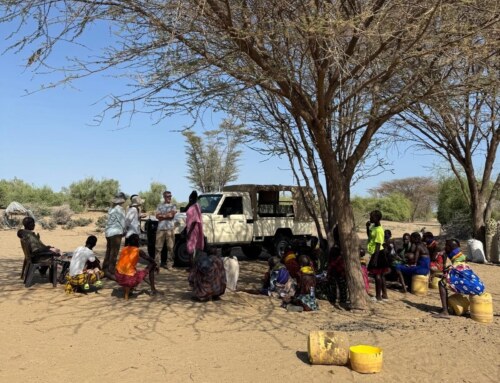
Not only is Lake Turkana connected with its environment, but it also has a direct relationship with the communities living around it. At the shores of the Lake, students talked to members of the communities and the conversations raised some very important questions, such as “How do people interact with and depend on the lake?”, “What is the impact of either climate change or overfishing on the lake?” and “How do these factors (climate change and overfishing) affect the livelihoods of the people living around Lake Turkana?”. A chance to reflect on the deep relationships between people and their natural resources, especially in times of climate change.

Left: Students and community members at the shores of Lake Turkana; Right: Students observing and comparing fish sizes
The students also looked directly at the fish, with different species laid out on a metal frame covered with chain-link. From this vast collection of different fish that had been caught, they could then identify any trends and changes that were occurring and learn what story that could tell. During the discussion, the community shared how the number of fish being caught was decreasing due to rising water levels within the lake and that the high demand of fish for livelihoods was causing overfishing. A story that allowed students to understand the systems and relationships on a much deeper and more personal level and that had emerged through observation, engagement and listening.

Left: Students and community members at the shores of Lake Turkana; Right: Some of the fish caught from Lake Turkana
Water as the messenger
Lake Turkana is very interlinked with its environment through the multiple rivers that connect with it, allowing for a unique interchange between the environments that these rivers run through. Lake Turkana is at the very north of Kenya, with its northern end crossing the border into Ethiopia, however even at Kerio Delta, where the students visited, one can see that these two areas are connected via the water and river by indicators such as species that are present in both areas.
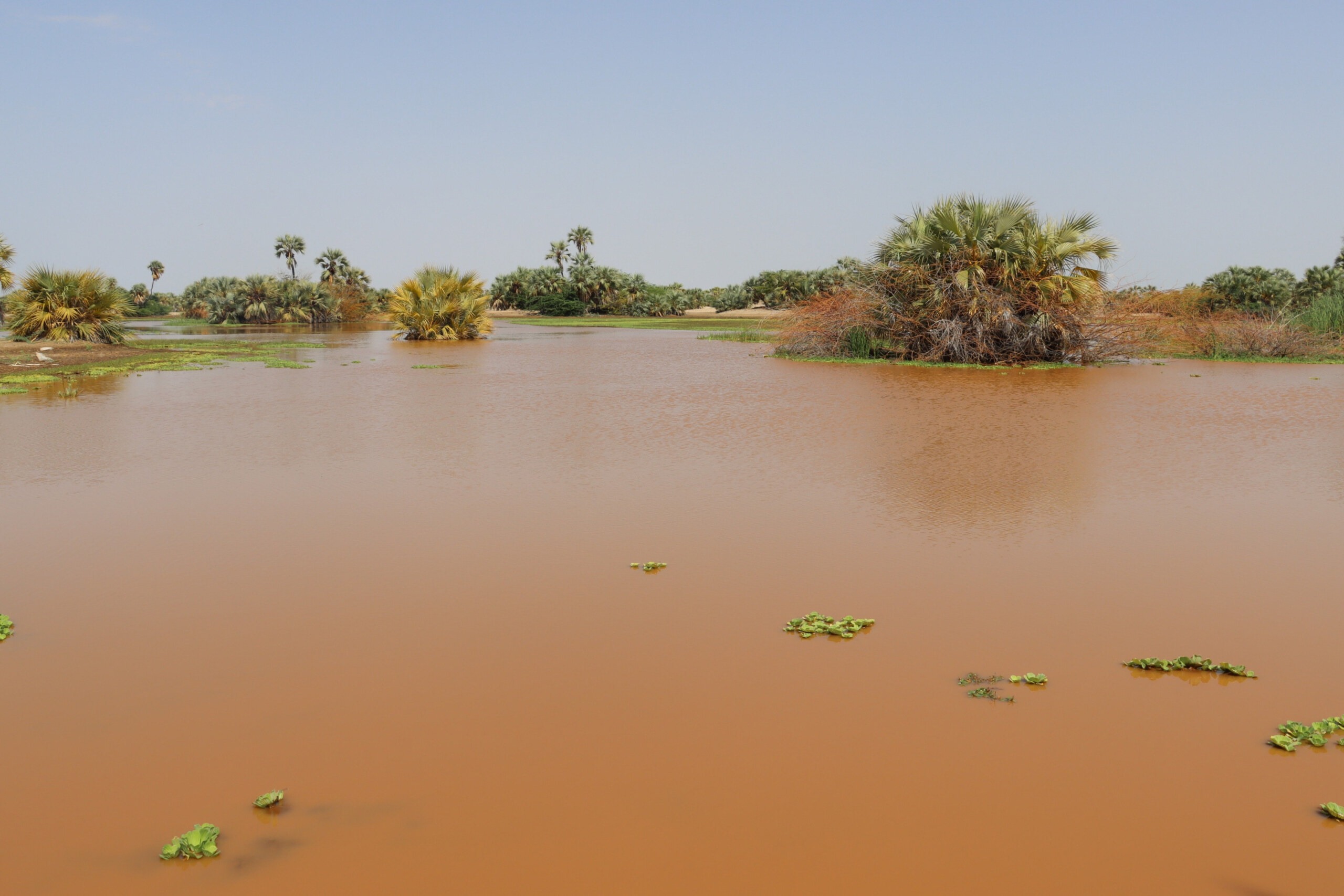
2025 lake level rise of Lake Turkana
One example is reeds that are from Ethiopia ending up in Lake Turkana. They detach from the ground, and form rafts, flowing with the river, making a long journey westward with help from the wind. Another example is pythons from Ethiopia also being found in Lake Turkana. These examples in the Lake Turkana region can serve as a proxy for hypotheses of how species spread between areas and even continents. Whilst they are hypotheses that have been proposed, they need to be tested. They aim to shed more light on, for example, how primates moved from Asia to Africa when the two continents were already disconnected, or how the Galagos came to Madagascar from the larger African continent. How and why did species make these journeys? Students can understand more about this by exploring cases such as reed rafts that cross water, like in Lake Turkana.
Learning in the field
The questions raised by observation and the learning that was inspired through experience during this trip showed exactly how valuable outreach programs are. The opportunity to learn directly from someone who understands the topic in the field is very enriching. As is processing and sharing information and knowledge to educate communities about why this research is important and why these sites should be protected. These are one of the many things that make programs such as the Harvard Summer Program at Turkana Basin Institute so valuable.

Students and the team crossing the Turkwel River
___
Authors: Chloe Woodley and Laura Katana